
High-Rise Bat Removal in Colorado
Colorado high-rise access changes quickly with wind, storms, snow, and the shape of the roof. We inspect the exterior details bats are using, identify workable weather windows, and stage exclusion so the building is not left partly sealed.
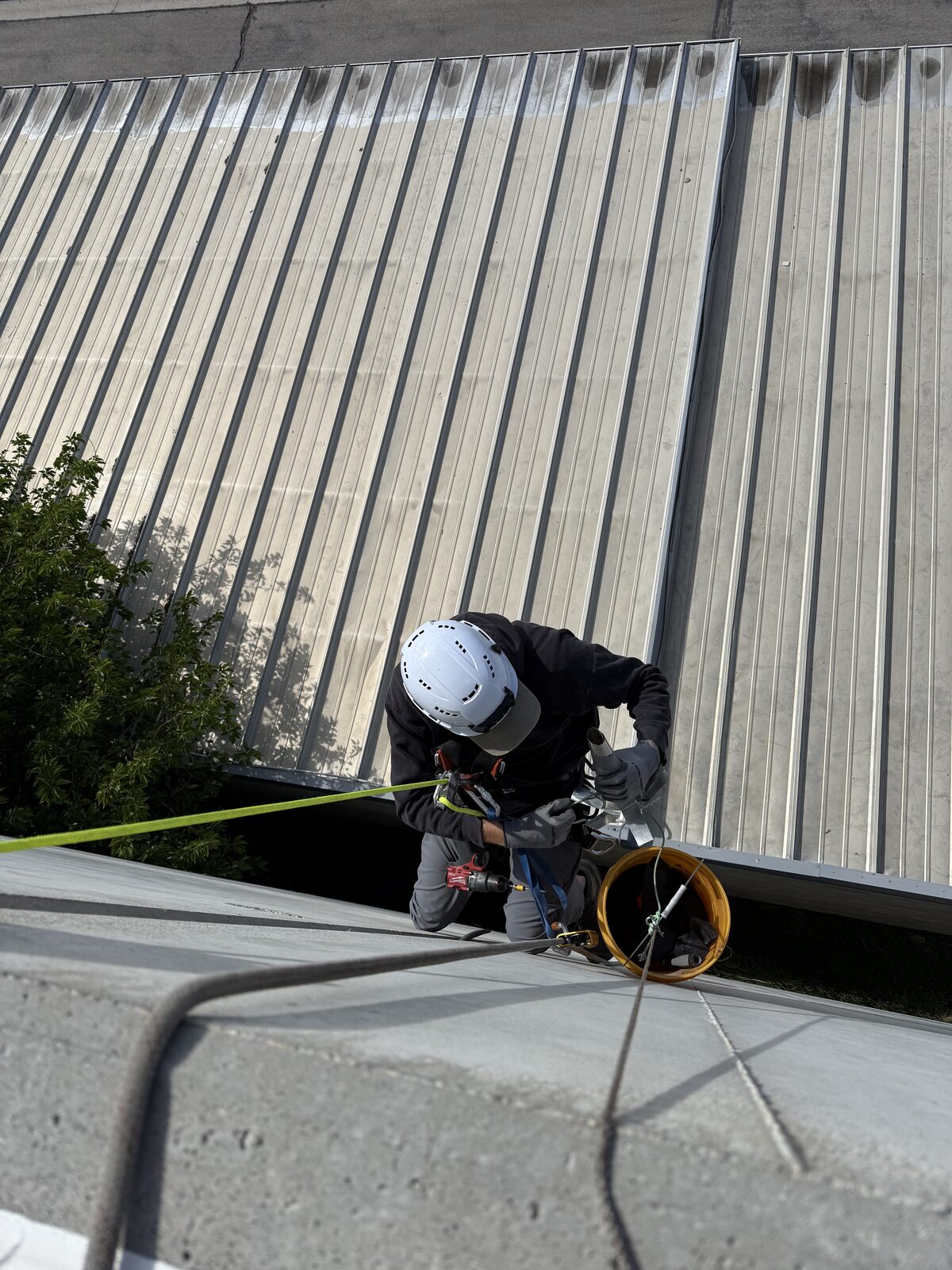
The repair plan has to account for the wall and the weather
Bats can enter where masonry, flashing, roof membranes, and mechanical screens meet. Freeze and thaw can also reopen a joint that looked sound from the ground. A close inspection distinguishes an active roost opening from a general maintenance crack.
Weather affects more than the workday. If an elevation cannot be completed safely, the exclusion sequence must still leave bats a clear route out and protect the unfinished section from being mistaken for a final repair.
A work plan built for Colorado
Confirm the active elevation
Dusk observations and exterior evidence narrow the search before a rope technician inspects the wall at close range.
Match access to the property
Roof shape, setbacks, wind exposure, pedestrian areas, and neighboring structures determine the descent plan.
Exclude after pups can fly
One-way devices are scheduled outside Colorado's June through August pupping period whenever possible.
Finish a weather-ready repair
After the roost clears, the active opening and nearby defects are closed with materials selected for the exterior assembly.
A Denver tower and a mountain hotel do not run the same way
An urban property may need sidewalk control and coordination with neighboring roofs. A mountain hotel may have sloped access, deeper snow, or a shorter daily weather window. The proposal should describe the actual building instead of using one standard access allowance.
Material choice also follows the substrate and exposure. The repair scope identifies whether the opening is in masonry, metal, flashing, or another exterior assembly before technicians carry materials down the wall.
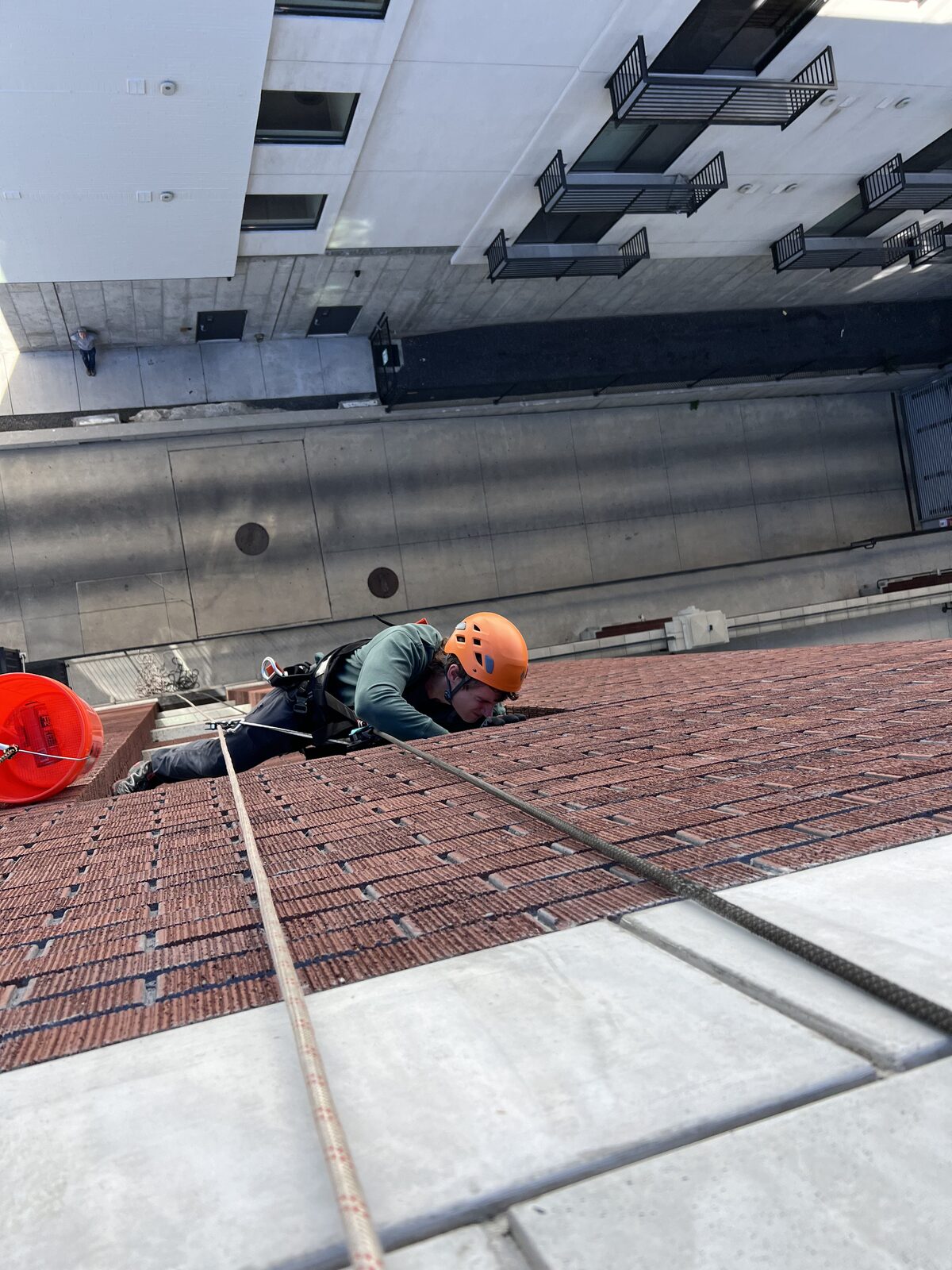
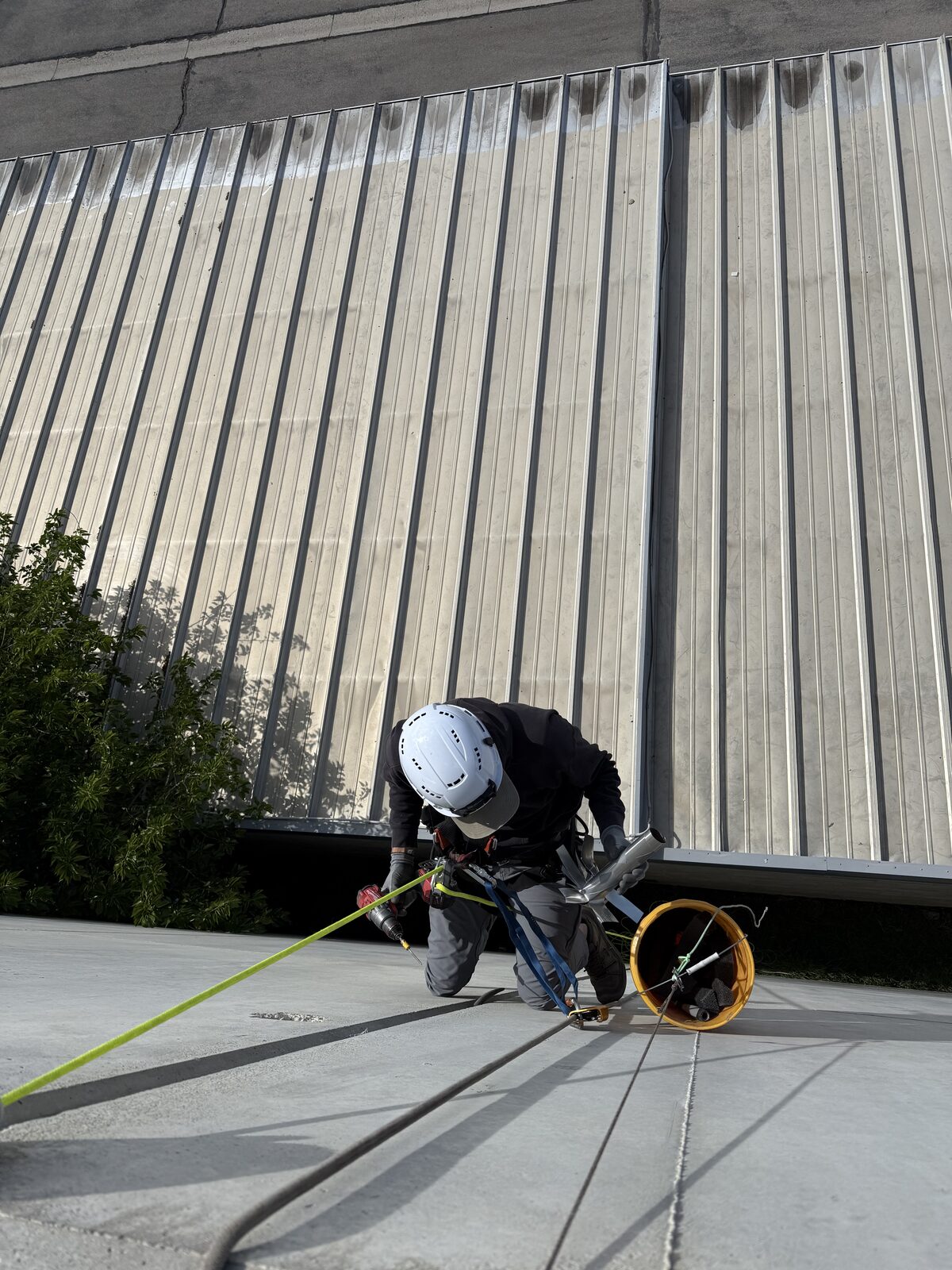
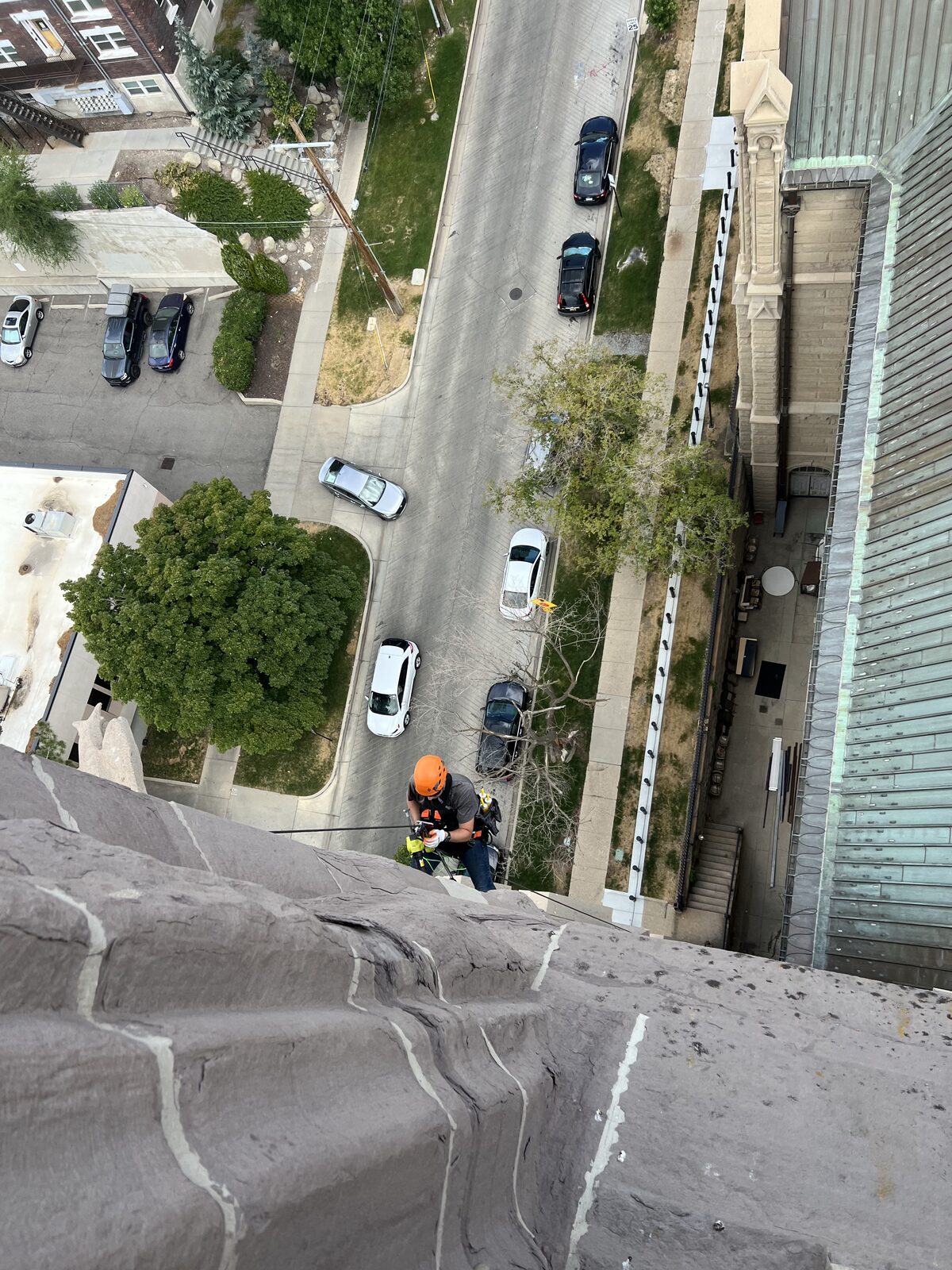
What upper-story bat exclusion looks like
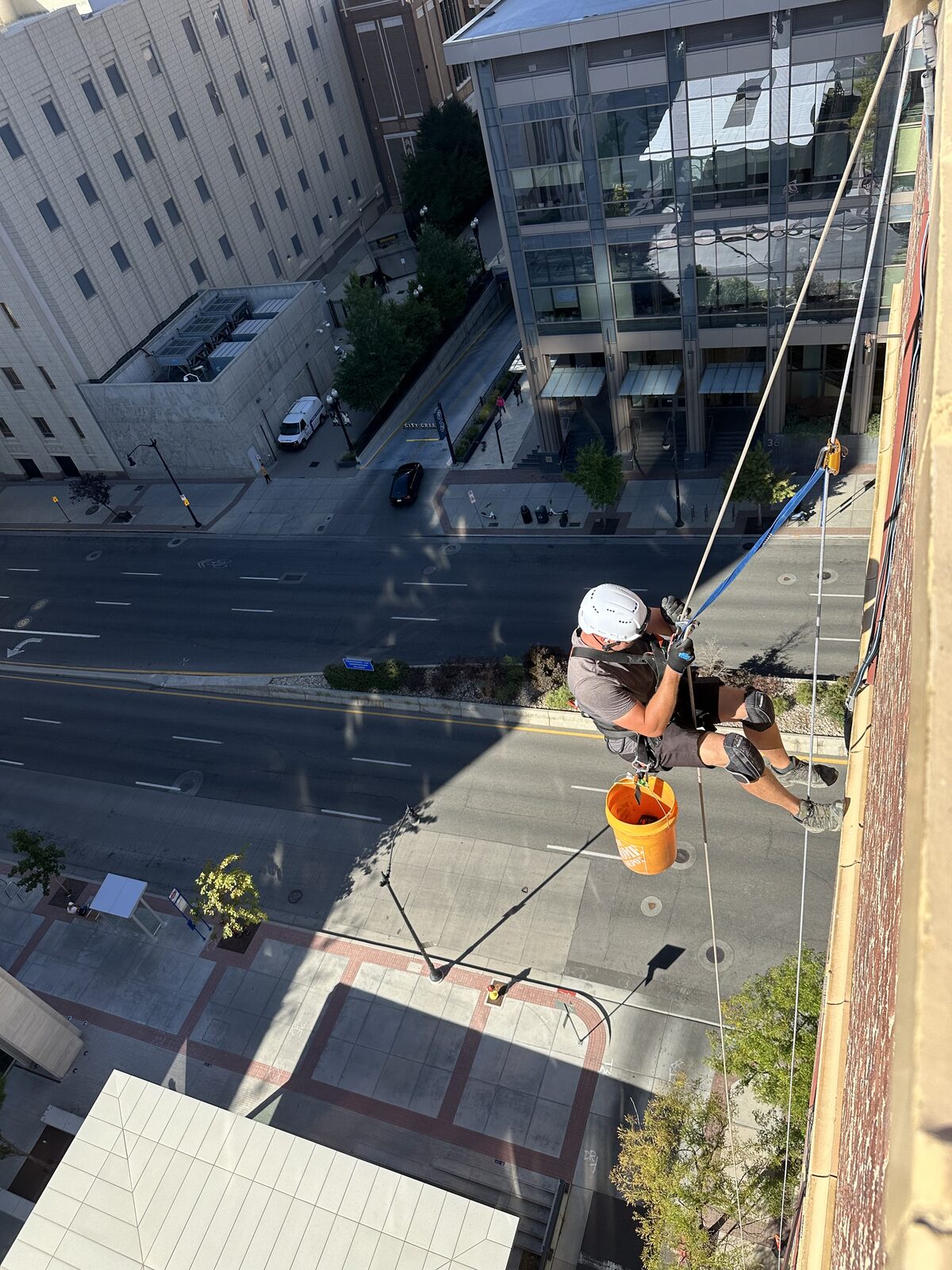
These field photos show close exterior inspection, rope positioning, and repair work at openings that cannot be reached safely from a ladder.
Colorado asks property owners to avoid summer exclusion
Colorado Parks and Wildlife recommends avoiding exclusion during the June through August pupping season. Young bats may still be unable to leave the roost during that period.
The property can use summer for inspection, access planning, and repair approval, then schedule exclusion when the colony can leave safely and exterior conditions allow the work.
Review Colorado Parks and Wildlife guidance for bats in buildings
Colorado high-rise bat questions
Can wind postpone rope-access bat work in Colorado?
Yes. Wind, precipitation, roof conditions, and visibility can change the safe work window. The proposal separates inspection, exclusion, and final repair so the schedule can adapt without trapping bats.
When should a Colorado building exclude a maternity colony?
Colorado Parks and Wildlife recommends avoiding the June through August pupping season. Inspection can happen earlier so the building is ready for the next workable period.
Are mountain hotels handled differently from Front Range towers?
The exclusion method is similar, but roof access, terrain, snow, guest circulation, and available weather hours can change the access plan and schedule.
Why check old repairs and sealant joints?
Movement and weather exposure can reopen a route or create a nearby alternative. The inspection checks the active opening together with the surrounding exterior assembly.
Will the building receive a map of repaired locations?
The closeout identifies the treated areas and final closures. The level of mapping and photography is set in the scope before work begins.
Colorado bat-removal resources
Bats entering a Colorado multistory property?
Call with the elevation, roof conditions, and recent activity. We can determine whether the next step is a dusk survey, wall inspection, or both.