
Birds in Your Dryer or Bathroom Vent: What Colorado Homeowners Should Do First
Chirping from an outside vent is usually the first clue. Before anyone pulls a nest, it helps to know which appliance that vent serves, which bird built the nest, and whether eggs or chicks are inside, because each answer changes the safe next step.
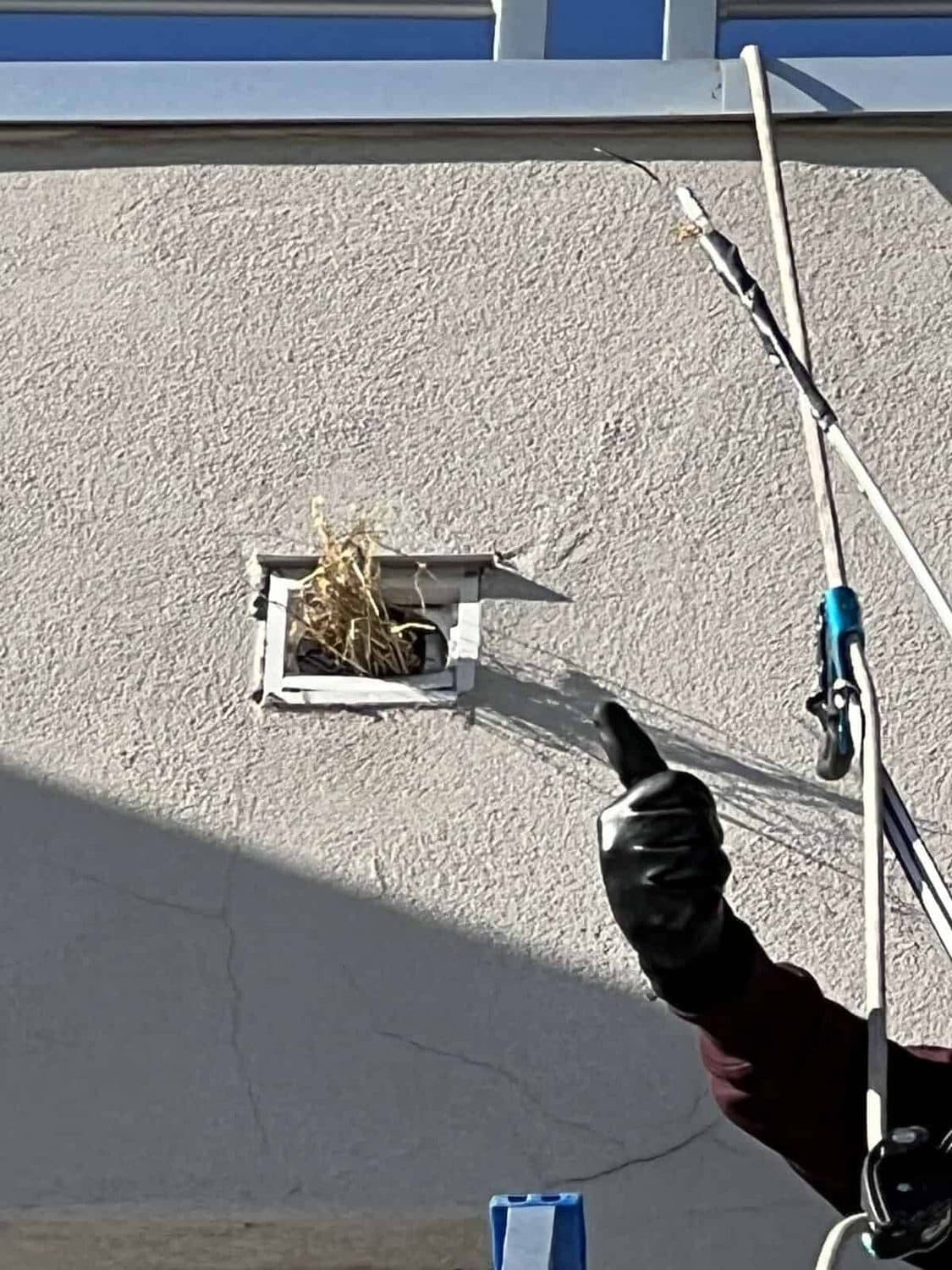
Figure out which vent it is before anything else
The first sign is often a sound in the laundry room: a scratch, a flutter, then a thin chorus of chirps that seems to come from inside the wall. The instinct is to go outside, find the vent with straw sticking out of it, and pull. Hold off for a minute. The first useful question is which appliance that vent belongs to. The bird comes second.
A dryer vent and a bathroom fan vent can sit a few feet apart on the same wall and look almost identical from the ground. They carry very different risks. The quick way to sort them out takes two people. One turns the dryer on to air fluff while the other watches the outside wall. The flap that lifts, or the hood that pushes out warm air, is the dryer. Then do the same with each bathroom fan. If nothing on the wall moves when the dryer is on, that is a finding too, because the U.S. Fire Administration's dryer safety guidance tells homeowners to make sure the outdoor vent covering opens when the dryer is operating. A flap held shut by nesting material fails that check.
If the nest is in the dryer vent, stop drying loads until someone has looked at it. That is a judgment call, not a law, but it is the one we would make in our own homes.
Why a blocked dryer vent is the more urgent one
Dryer exhaust is hot and full of lint. A nest does two things to it at once: it narrows the path the air has to travel, and it adds a pile of dry grass and twigs right where that warm, lint-heavy air exits. The U.S. Fire Administration reports that failure to clean was the leading factor, at 31 percent, contributing to the ignition of clothes dryer fires in homes from 2018 to 2020. A packed vent adds buildup you cannot see from inside the house.
Clues that point to the dryer side:
- Loads take noticeably longer to dry than they used to
- The laundry room gets hot or humid while the dryer is on
- A musty or sour smell when the dryer starts
- Chirping that gets louder near the dryer connection behind the machine
Bathroom fan vents are a different animal. There is no heat and very little lint, so the fire concern drops away. What you get instead is a fan that hums but does not pull steam out of the room, droppings and nest debris sitting in the duct, and sometimes a bird working its way down the duct toward the fan housing in the ceiling. Less urgent, still worth fixing before spring.
Which birds end up in Colorado vents, and why it matters
Two birds that regularly treat a vent hood like a ready-made nest box are non-native: the house sparrow and the European starling. Colorado Parks and Wildlife notes that starlings use trees, buildings, and other human structures for nesting. Neither one is covered by the Migratory Bird Treaty Act. The U.S. Fish and Wildlife Service lists non-native species such as starlings, house sparrows, and rock pigeons as outside that law, and Colorado Parks and Wildlife allows a landowner or their agent to take starlings and house sparrows without a permit on private property that is experiencing damage.
Native songbirds are a different story. The house finch, for one, is on the federal list of protected migratory birds in 50 CFR 10.13. Protected status covers the bird, its eggs, and its nest. So before anyone reaches into a vent, somebody needs to know which bird built what is inside.
That is harder than it sounds. From the ground you often see only a tail or a beak disappearing into the hood, and nest material looks much the same from one species to the next. Watching the adults come and go for a few minutes, from a distance, usually settles it.
Eggs or chicks change the timeline
Federal policy draws a clear line based on what is in the nest. Under the Fish and Wildlife Service's January 2025 nest memorandum, an in-use nest is one that contains viable eggs or nestlings, and it stays in use until the young fledge and no longer depend on it. Destroying an in-use nest of a protected bird requires federal authorization. An inactive nest, which includes one that adults are still building before the first egg, can be destroyed without a permit as long as nobody keeps the nest or its contents. The memo also notes that state and local laws can add protections of their own.
The same memo puts the burden on whoever does the work to make sure the nest is inactive, and it recommends working outside nesting season to lower the risk. In practical terms:
- Non-native bird, any nest stage: the vent can be cleared and capped.
- Protected native bird, nest being built or already abandoned: it can usually be cleared, carefully, with no eggs or young present.
- Protected native bird, eggs or chicks inside: the vent generally waits until the young have fledged, unless the right federal authorization is in place. Nobody should promise you same-day removal in that situation.
Fall is a sensible time to deal with a vent that held a brood earlier in the year. If the young have fledged and the nest is empty, it can be cleared and capped before next season's nest building starts. Confirm that first, though. An empty-looking hood is not proof.
Pulling the nest is not the same as clearing the duct
What you can see at the hood is only the front of the nest. Birds keep stuffing material back into the duct, so the nest can continue well past the part you can see. Pulling the visible clump out of the hood and calling it done leaves the rest of the blockage in place, sometimes pushed deeper.
A complete job has a few separate parts:
- Removal. Any birds are removed or allowed to leave, depending on species and nest stage.
- Nest and debris clearing. Nesting material is cleared from the full reachable run of the duct, not just the hood.
- Decontamination. Droppings and nest debris get cleaned out of the vent. Bird droppings are not something to scrape out bare-handed, and the CDC advises that large accumulations be handled by professionals.
- Duct check. The USFA flyer also tells homeowners to check that venting is not damaged, crushed, or restricted. If the duct itself is torn or disconnected, that is a repair for a dryer vent or HVAC technician, and a good inspection flags it before anyone caps over it.
- Capping. A cover that fits that vent type goes on last.
Larger birds add one more item. They sometimes pull down loosely fastened soffit panels to reach the cavity behind them. If the vent sits near the eave, check the soffit too, since fixing one opening and leaving the other just moves the nest over a foot. Our guide to how wildlife gets into Colorado homes covers the other openings along the same walls and roofline.
The right cover for each vent
This is where well-meaning fixes go wrong. Stapling window screen or hardware cloth over a dryer vent feels sensible. It is also against code. Section M1502.3 of the International Residential Code, in the 2021 edition listed for Colorado's Division of Fire Prevention and Control (local building departments adopt their own editions), says the outside end of a dryer exhaust duct shall have a backdraft damper and that no screen may be installed there. Lint catches on mesh, the mesh clogs, and you have rebuilt the blockage you were trying to prevent.
What works instead:
- Dryer vents: a hood with a damper or flap that opens under exhaust pressure and closes when the dryer stops, sized so birds cannot perch on it or push past it.
- Bathroom and kitchen exhaust vents: a similar damper-style cap. There is less lint here, but the goal is the same: air out, birds out.
- Every vent on the same wall: once one vent gets capped, the birds often try the next opening over. Capping only the one they used last season is how people end up calling again in May.
Colorado Wildlife Specialists installs professional-grade vent caps after the removal and cleanup are done, and every vent cap installation includes a lifetime warranty, as described on our bird-in-vent service page.
What an inspection should cover
If you bring someone out, the visit should answer five questions before any tools come out:
- Which appliance each nested vent serves
- Which bird is using it, and whether that species is protected
- Whether the nest is in use, with eggs or young, or inactive
- How far the nest and debris extend into the duct, and whether the duct is damaged
- Which other openings on that wall, including soffits and other vents, need the same treatment
Get those answers and the rest of the job follows in order. Skip them and you risk a crushed duct behind a new cap, a protected nest pulled in June, or a sparrow moving one vent over. If you have chirping in a wall this fall, schedule an inspection and we will start with the appliance and the bird, then fix the vent.
Frequently asked questions
Can I pull a bird nest out of my dryer vent myself?
Only if the bird is a non-native species such as a house sparrow or starling, or you are sure the nest holds no eggs or chicks. Even then, the nest often continues deeper into the duct than you can reach from the hood. Under U.S. Fish and Wildlife Service policy, a protected native bird's nest holding viable eggs or nestlings cannot be destroyed without federal authorization, and telling a sparrow or starling apart from a native finch at the vent opening is harder than it sounds.
Is a bird nest in a bathroom fan vent dangerous?
It is usually less urgent than a dryer vent because a bath fan does not push hot, lint-filled air. The problem is that the fan stops moving moisture out of the room, droppings and nest debris sit in the duct, and birds can sometimes work their way down toward the fan housing. It still needs to be cleared and capped, just with less of a fire concern.
Will the birds come back after the nest is removed?
Often, yes, if the opening stays the same. That is why removal is paired with a cap designed for that specific vent. Colorado Wildlife Specialists installs vent caps that include a lifetime warranty on every installation, as described on our bird-in-vent service page.
Can I put window screen or hardware cloth over my dryer vent to keep birds out?
No. The International Residential Code section on dryer exhaust (M1502.3) says the outside end of a dryer duct needs a backdraft damper and must not have a screen on it. Lint collects on mesh and chokes the airflow. What the vent needs is a damper-style hood that lifts when the dryer blows and falls shut when it stops.
Related reading
Birds nesting in a vent at your house?
We identify the bird and the nest status first, then clear the vent and cap it.