
How Wildlife Gets Into Your Home in Colorado: The Common Entry Points
Most wildlife problems start at a gap that has been open for years. Here are the entry points that matter most on Colorado homes, how little space each animal needs, and what a lasting fix looks like.
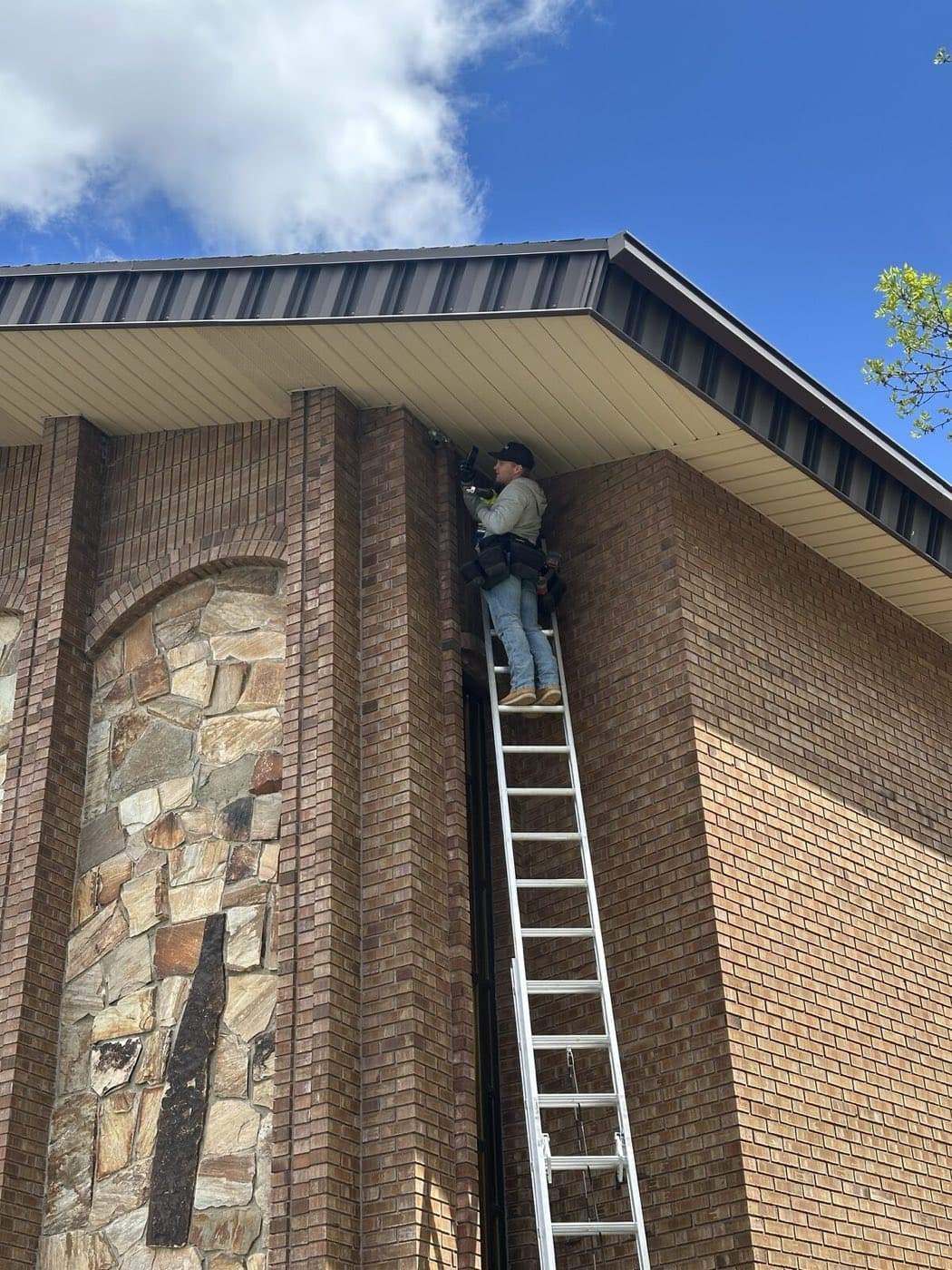
Colorado homes deal with a particular kind of wildlife pressure that homeowners in other states do not face to the same degree. The Front Range foothills and Denver metro suburbs sit at the edge of open space, and that geography means squirrels, raccoons, bats, skunks, and the occasional marmot are not occasional visitors. They are residents looking for the same thing you already have: a warm, dry, sheltered place to raise young.
Most people find out something is living in their home through sound. Scratching above the bedroom ceiling. A thump at dusk that repeats on the same schedule every night. A smell that builds slowly over several weeks. By the time any of those signs show up, the animal has usually been inside for a while. The entry point was there long before the first noise.
This post covers where animals get in, how little space each species actually needs, and what the correct fix looks like. The answer is almost always exclusion, which means sealing the entry points so animals cannot get back in, not trapping and releasing somewhere down the road. Exclusion addresses the actual problem. Trapping without sealing means a different animal moves into the same vacancy within weeks.
The Roofline Is Where Most Colorado Wildlife Problems Start
The roofline, including fascia boards, soffits, and the junctions where different roof planes meet, is the most common entry zone for wildlife in Colorado. It sits high enough that most homeowners never inspect it closely. It also takes the most weather punishment: freeze-thaw cycles through the winter, UV exposure through the summer, and decades of wood movement that gradually open seams.
Fascia is the flat board running along the lower edge of the roof. Soffit is the underside of the roof overhang. Together they form a horizontal seam that runs the full perimeter of the home. That seam is where squirrels and raccoons look first, and both are common throughout the Denver metro, Colorado Springs, and the communities along the Front Range foothills.
A gap of 1.5 inches is enough for a squirrel to enter. A raccoon needs roughly 4 inches, but raccoons are strong animals and will pull back softened or rotted soffit material to enlarge a gap that would otherwise stop them. What starts as a half-inch crack after a wet winter can become a usable entry point inside a single season.
During any roofline inspection, pay attention to:
- Corners where fascia boards meet at angles, particularly above garage doors
- Any junction where a dormer meets the main roofline
- Low spots where water pools during snowmelt and accelerates wood rot
- The ridge, where two roof planes meet at the peak, especially on older homes without metal ridge caps
Gable Vents: A Wide-Open Door Most People Overlook
Gable vents are the screened or louvered openings on the triangular end walls of an attic. Their purpose is ventilation. The factory-installed screens on most gable vents have 1/4-inch mesh, which is too coarse to stop a flying squirrel and will not stop a juvenile raccoon. In Boulder and Fort Collins, where mature tree canopy meets older housing stock, gable vent intrusions are among the most common calls we handle.
The mesh problem compounds over time. Plastic screening breaks down under Colorado's high-altitude UV exposure faster than it does at lower elevations. Metal screens corrode, especially on homes that catch road salt spray near the major highways. An animal that pushes against a failing screen repeatedly will eventually break through. The correct fix is 1/4-inch hardware cloth, a rigid galvanized mesh that holds its shape under pressure. Standard window screen is not a substitute. It looks fine from the ground and fails quickly against any determined animal.
A simple test from inside the attic: if you can push the gable screen inward with light hand pressure, it needs replacement now, not later.
What Is Getting Through Your Dryer and Bathroom Vents?
Dryer vents, bathroom exhaust vents, and kitchen range hoods terminate on the exterior of the home, usually through a sidewall or the roof. From the outside, each one exhausts warmth and represents a protected cavity. Colorado winters make these openings particularly attractive. Animals are not choosing your home arbitrarily. They are following the heat signature.
Birds are the most common occupant of dryer vents across the Thornton and Westminster areas. European starlings and house sparrows, both non-native and unprotected species, will pack nesting material into a dryer duct until airflow is blocked. The consequences go beyond the wildlife problem. According to the U.S. Fire Administration, dryer vent fires account for roughly 2,900 house fires per year nationally, and lint accumulation is a primary cause. A clogged vent also forces the dryer to run longer cycles, which raises energy costs year-round.
Native birds nesting in vents present a different legal situation. Many songbirds hold protection under the Migratory Bird Treaty Act, which means active nests with eggs or young cannot be disturbed without a federal permit. According to Colorado Parks and Wildlife (cpw.state.co.us), the protected status of the specific species in your vent determines the legal timeline for any action. A licensed technician identifies the species before recommending anything.
The right fix for dryer and exhaust vents is a pest-proof cover with a spring-loaded damper that opens under airflow pressure and closes when the appliance is off. Rigid mesh should never go over a dryer vent because lint accumulates in it and recreates the same fire risk you were trying to eliminate.
Chimneys and the Raccoon Problem Along the Front Range
An uncapped chimney is a hollow tree from a raccoon's perspective. Raccoons are instinctive cavity nesters, and a masonry flue, particularly one that has not been used since the previous heating season, is dark, sheltered from weather, and thermally stable through Colorado's spring temperature swings. Raccoon mothers denning in chimney flues is among the most common spring service calls across Lakewood, Arvada, and the older neighborhoods of Denver.
The correct fix is a chimney cap with a welded wire cage around the sides. The cap keeps rain and snowmelt out, which matters for masonry integrity through freeze-thaw cycles, and the cage prevents animal entry. A cap without a cage, or one with corroded welds, is not adequate. Check yours after any significant hail event, which can damage sheet metal caps and bend wire sections.
Chimney swifts are a separate situation that requires a different approach entirely. These migratory birds are federally protected. According to Colorado Parks and Wildlife (cpw.state.co.us), active swift nests cannot be disturbed or removed during nesting season. If swifts have established a nest in your chimney, work with a licensed professional who will advise on the legal window before any exclusion or capping begins.
For chimneys with an active raccoon family: removing adults before the young are mobile creates additional problems, and in some seasons may run contrary to Colorado wildlife regulations. The young become self-sufficient within 8 to 10 weeks of birth. A licensed technician will assess whether a one-way exclusion device is appropriate for your situation or whether a waiting period is the right call.
Foundation Gaps, Crawlspace Vents, and Below-Grade Entry Points
The perimeter of your foundation is a different category of vulnerability from the roofline. Skunks, groundhogs, and pack rats, a species particularly prevalent on Colorado's Front Range and into the foothills, work at or below grade. A crawlspace without proper enclosure is an open invitation, and the consequences of a skunk denning there are considerable.
Crawlspace vents are standard construction in older Colorado homes and remain common throughout the Longmont and Aurora areas. Original vent covers are often thin stamped metal or brittle plastic. They corrode, warp, and eventually fall from their frames. A skunk needs roughly 4 inches of vertical clearance to enter a crawlspace. Pack rats are smaller and more persistent. A groundhog, given enough time and loose soil, will tunnel under a foundation and create its own entry point where the soil has settled away from the sill plate.
Basement window wells are another entry zone when the protective cover is cracked or missing. Animals that fall into an open window well often cannot climb back out and will eventually force through the window itself if no one discovers them first.
Exclusion at the foundation level requires heavier materials than gaps higher on the structure. Hardware cloth should be at least 1/4-inch or 1/2-inch gauge, buried at least 12 inches below grade, and angled outward at the base to deter digging. Spray foam alone is not sufficient for rodents, who can chew through cured foam without difficulty. Physical barriers, not gap-fillers, are what hold at ground level.
How Much Gap Does Each Animal Actually Need?
This is the question that surprises most homeowners during an inspection. The gaps animals use are smaller than people expect, and that mismatch is why entry points go unnoticed for so long. Here is a general reference for the species most commonly encountered in Colorado homes:
- House mouse: 1/4 inch (roughly the diameter of a pencil)
- Norway rat or pack rat: 1/2 inch
- Bat: a gap small enough to be easily overlooked, smaller than most other animals on this list
- Flying squirrel: 1 inch
- Gray or fox squirrel: 1.5 inches
- Opossum: 3 to 4 inches
- Raccoon: 4 inches (and will enlarge soft or damaged material further)
Bats in Colorado deserve a specific note. Multiple bat species are present across the state, and according to Colorado Parks and Wildlife (cpw.state.co.us), several species hold protected status under state law in addition to federal protections. Bat exclusion in Colorado should be done only during the windows outside the maternity season, which runs roughly June through August. Sealing during that period traps flightless pups inside. A licensed professional will know the right exclusion window for your region and for the species present in your structure. If you are not sure whether you have bats, read our guide on keeping bats out of your home in Colorado before taking any action.
Is There Already an Animal Inside When You Seal?
This is the question that separates a correct exclusion job from one that creates a worse problem. Sealing an entry point while animals are still inside traps them. Trapped adults damage walls and insulation trying to escape. Young animals that cannot escape die inside the structure, and the resulting odor can persist for months even after the carcass is removed.
A proper exclusion follows a sequence. First, a thorough interior and exterior inspection to determine whether the space is actively occupied. Second, if animals are present, a one-way exclusion device goes in at the primary entry point. The animal exits to forage and cannot return. Third, once the space is confirmed empty (confirmed over several days of monitoring, not assumed), the device is removed and the opening is permanently sealed, along with every other potential entry point found during the initial inspection.
That sequence takes longer than simply plugging holes. It takes longer because confirming an empty space takes time. Skipping that confirmation step is what leads to callbacks, odor problems, and additional damage. If you have heard scratching and are wondering what is up there, our post on scratching sounds in Colorado attics covers what different species sound like and when they are most active.
Understanding the cost side of this work is also useful. Our post on wildlife removal costs in Colorado covers what drives the price range and what to expect from a legitimate inspection process.
Frequently asked questions
How small a gap does a mouse need to enter a Colorado home?
A house mouse can squeeze through a gap roughly the size of a dime, about 1/4 inch. A Norway rat needs about 1/2 inch. Cracks around pipes, utility lines, foundation weep holes, and gaps where the siding meets the foundation are enough for rodents to establish a pathway inside. Steel wool is a short-term deterrent. Permanent exclusion requires rigid materials: exterior-rated caulk, metal flashing, or hardware cloth, depending on where the gap is.
Can I exclude bats from my home on my own in Colorado?
Almost certainly not safely without training, and not during the wrong season. According to Colorado Parks and Wildlife (cpw.state.co.us), exclusion should be avoided during the bat maternity season, roughly June through August, when young bats are present but not yet able to fly. Sealing during that window traps flightless pups inside. Multiple bat species in Colorado also carry protected status under state and federal law. A licensed wildlife professional will know the right exclusion window for your region and species.
What is a one-way door and how does it work?
A one-way exclusion device is a tube or flap installed over an active entry point. Animals push through to exit when they leave to forage but cannot re-enter from the outside. Once the space is confirmed empty, the device is removed and the opening is permanently sealed. No animal is trapped, injured, or separated from young. One-way devices are sized and positioned by species, and they are the preferred humane method for most wildlife removal situations.
How much does wildlife exclusion cost in Colorado?
Pricing varies based on the home's size, the number of entry points, the species involved, and how accessible the problem areas are. Industry ranges typically fall between a few hundred dollars for a single entry point repair and several thousand dollars for a full-perimeter seal on a larger structure. The only accurate number comes from an on-site inspection. We provide those at no charge.
Related reading
Wildlife in your home? Contact us today.
Call for a phone consultation.