
How to Keep Bats Out of Your House in Colorado
Bats slip into Colorado homes through gaps most owners never notice, and getting them out for good takes the right method at the right time of year. Here is what Colorado Parks and Wildlife guidance calls for and how proper exclusion works.
Colorado Bats Can Squeeze Through a Gap Smaller Than Your Thumb
The big brown bat, one of the two species most commonly found roosting in Colorado homes, needs only a small gap to enter a structure, and the little brown bat can squeeze through an even narrower one. A warped fascia board, a gap where a pipe enters the wall, a gable vent with a torn screen: any of these is a workable door for an entire colony. By the time a Denver or Fort Collins homeowner hears something in the attic, the bats have usually been there for weeks, sometimes months.
This post covers what actually keeps bats out for good, why the timing of any removal work matters as much as the method, and what Colorado guidance calls for before anyone touches an active bat roost.
Why Colorado Homes Attract Bat Colonies
Bats are not after food stored in your kitchen, and they have no interest in your pets. They are looking for a warm, dark, protected space to raise young, and residential structures offer exactly what a rocky cliff face or hollow tree once provided. Attics, wall voids, the gap between a chimney and its stone surround, and the space behind wood soffits are all prime territory.
On the Front Range, the big brown bat is the species most often found in homes. Females form maternity colonies in late spring, typically arriving in May. Each female gives birth to a single pup and nurses it through the summer. Colony size varies widely. A modest attic roost might hold 20 to 30 animals. An established colony in an older home in Arvada or Westminster, one that has used the same structure for several years, can reach 200 or more.
Altitude plays a role in Colorado too. Homeowners in Boulder and Longmont, closer to the foothills, are more likely to encounter Townsend's big-eared bats and several other species that range between lower elevations and the mountains. The biology differs somewhat from species to species, but the management approach, exclusion during the right window, applies to all of them.
Bat colonies return to the same roost year after year. A colony that spent last summer in your Aurora attic will attempt to come back this May. That consistency is what makes timing so important: if you miss the window for exclusion, you are waiting another full season.
Bat Exclusion: What It Is and How It Works
Exclusion means sealing the entry points so bats cannot return after they fly out to forage at night. It is not trapping, not poisoning, and not killing. All three of those approaches are both illegal and counterproductive. A colony of big brown bats can consume large numbers of insects each night, including agricultural pest moths and mosquitoes. They are genuinely useful outside your walls. The goal is to redirect them, not eliminate them.
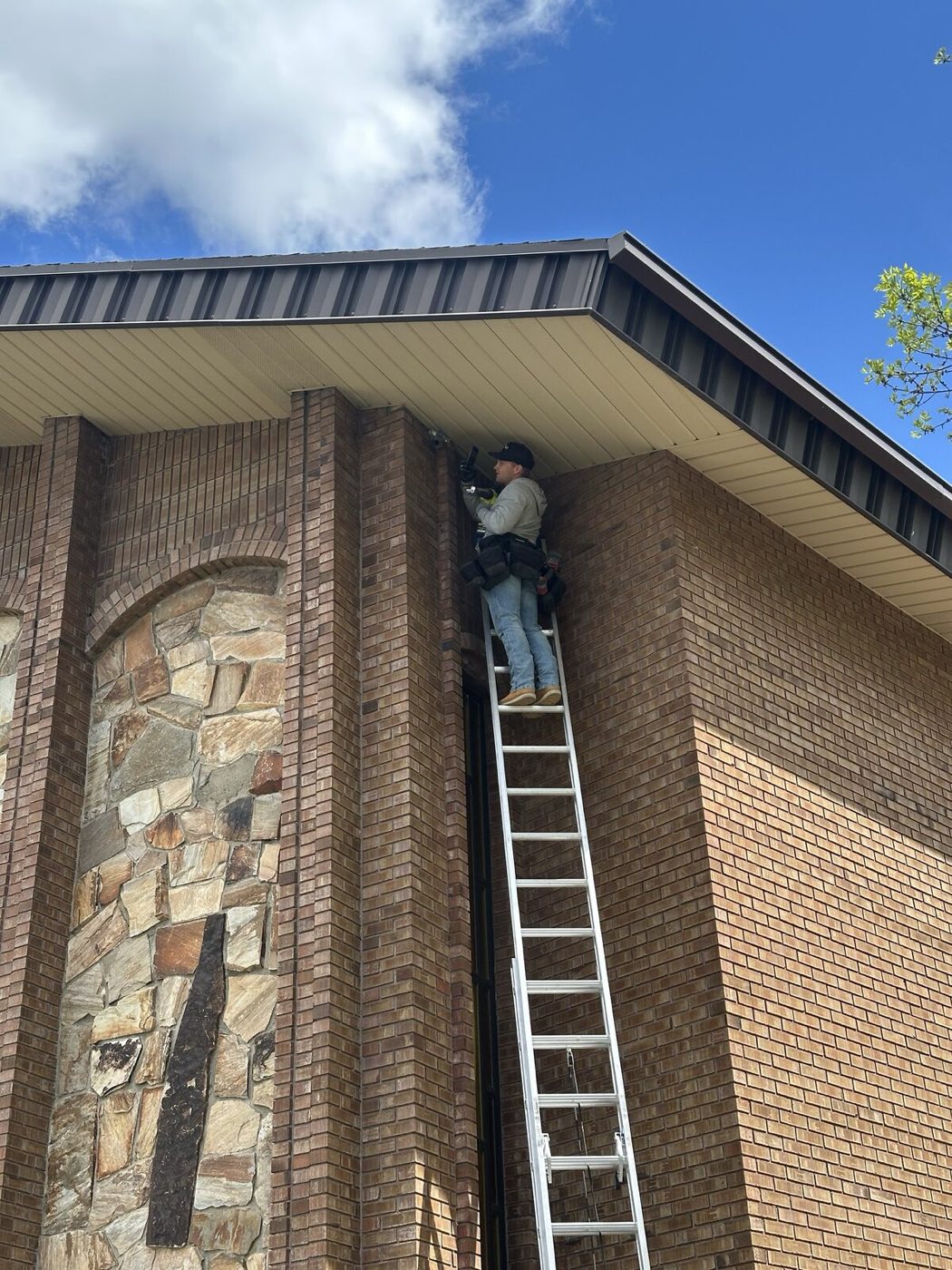
A proper exclusion follows a defined sequence. A technician first inspects the full exterior of the structure to identify every opening bats are using, as well as secondary gaps they could switch to if the primary ones are closed. Next, one-way exclusion devices, small tubes or netting panels that let bats exit but block re-entry, are installed over the active openings. The colony exits over several nights to forage and cannot get back in. Once the structure is confirmed empty, typically within a week to two weeks, the devices come down and every opening is permanently sealed. Materials matter here: exterior-rated caulk, quarter-inch hardware cloth, metal flashing, and foam backer rod are the right tools for different situations. Standard window screen tears too easily to hold.
Done correctly, exclusion is a permanent fix. Done incorrectly, meaning entry points sealed while animals are still inside, it creates a worse problem.
Is There a Legal Window for Bat Exclusion in Colorado?
Yes, and it is narrower than most homeowners expect. According to Colorado Parks and Wildlife (CPW), exclusion work should be avoided during the bat maternity season, roughly June through August. During this period, pups are too young to fly. If an exclusion device is installed while pups are inside, they cannot exit, and the result is an attic full of dead pups, which creates odor, structural contamination, and a much larger remediation bill than a properly timed exclusion would have cost.
The two workable windows fall on either side of the maternity season. Late summer and early fall, roughly late August through October, is the preferred window: pups are flying, the colony is active and still exiting nightly to forage, and temperatures have not yet dropped enough to push bats into hibernation. Early spring, once hibernation ends and before females return to give birth, is the secondary window, though the timeline is tight.
All bat species in Colorado are protected under state wildlife law. According to Colorado Parks and Wildlife, killing bats is illegal, and exclusion is the only lawful way to remove them, timed around the seasonal guidance CPW sets. The northern long-eared bat, found at lower foothills elevations in Colorado, is also federally protected under the Endangered Species Act. If a company quotes bat removal without asking about the current date or mentioning the maternity season, that is a meaningful warning sign.
How Do You Know Bats Are in Your Colorado Home?
Most homeowners in the Denver metro and along the Front Range find out one of four ways. They watch the roofline at dusk and see bats streaming out from one spot. They find guano accumulating in the attic, on a basement windowsill below a gap, or on a deck directly beneath a soffit. They notice a sharp ammonia smell, especially after the colony has been in place for more than one season. Or they find a single bat inside the living space, which usually entered through an interior gap between the attic and the main house.
Bat guano looks similar to mouse droppings but crumbles to powder when dry and often contains visible insect fragments. A large deposit, particularly below a concentrated roost area, is a reliable indicator of the colony's location. In homes where a colony has used the attic for multiple years, guano can accumulate several inches deep and may soak into insulation. Cleanup in that situation is not optional: accumulated guano carries a risk of histoplasmosis, a respiratory illness caused by a fungus that grows in decomposing bat droppings.
If a bat enters your living space and there is any chance it came into contact with a sleeping person or a child, do not simply release it outside. Bat bites are small and can go unnoticed, particularly on a sleeping person. Public health guidance is that any potential exposure warrants a rabies evaluation. Contain the bat without direct skin contact and contact your local health department. In Colorado Springs, Denver, and other metro areas, animal control can advise you quickly on next steps.
Keeping Bats Out Before They Arrive: Prevention That Holds
The most cost-effective approach is proofing a home before a colony establishes. A structure that has never hosted bats can be protected with a focused inspection and sealing of the most common entry zones. Here is what that typically covers.
- Fascia and soffit gaps. Where wood meets wood, especially on older homes with board-and-batten soffits or painted wood fascia, small gaps open up as the wood moves with Colorado's temperature swings. A quarter-inch gap is all a little brown bat needs.
- Ridge vents and gable vents. Vents are necessary for attic ventilation and should be covered with hardware cloth using a mesh size of one-quarter inch or smaller. Standard window screen pulls free under pressure from outside.
- Chimney gaps. The junction between a chimney and the surrounding flashing or chase is one of the most overlooked entry points, particularly on older homes in Lakewood, Thornton, and similar areas with a lot of mid-century construction. Caulk shrinks and cracks over time, opening gaps that were once sealed.
- Pipe and conduit penetrations. Every spot where a plumbing pipe, gas line, or electrical conduit enters through an exterior wall is a potential gap. Exterior-rated caulk or foam backer rod keeps these sealed.
- Roof-to-wall transitions. On homes with dormers, bay windows, or complex rooflines, the intersections between different roof planes and the exterior walls often open up as the structure settles. These can be easy to miss without a ladder and a careful look.
A thorough inspection by a licensed wildlife technician covers all of these locations systematically. Many homeowners are surprised by how many vulnerabilities their home has. Proofing before a colony arrives is significantly less expensive than exclusion and guano remediation after one has established.
What Should a Legitimate Colorado Wildlife Company Do From the First Call?
A licensed wildlife company starts with an on-site inspection, typically at no charge. The technician examines the full exterior, identifies active entry points and secondary vulnerabilities, estimates colony size based on visual evidence and guano deposits, and discusses the exclusion timeline relative to the current date and CPW's seasonal guidance.
They should be specific about scope: exclusion device installation, the waiting period while the colony exits, the return visit to remove devices and seal openings permanently, and whether guano cleanup or insulation work is included in the quoted price. Ask directly whether the company is licensed and insured for wildlife control work and whether they are operating within CPW's maternity-season guidance. Both questions have clear answers, and a legitimate company will give them without hesitation.
Pricing across Colorado varies by job size. A single-entry situation with a small colony may run a few hundred dollars. A multi-entry job on a large home with accumulated guano and damaged insulation can reach several thousand. No reliable number is possible without seeing the specific home. A firm phone quote without an inspection is a guess, not an estimate.
Frequently asked questions
Can I seal up bat entry points myself right now?
It depends on the time of year. According to Colorado Parks and Wildlife, exclusion work should be avoided during the bat maternity season, roughly June through August, because flightless pups are inside. Sealing those openings during that window traps them and creates a secondary cleanup problem. Outside that window, a licensed technician can install one-way exclusion devices, wait for the colony to vacate, and then seal every opening permanently.
How do I know if I have a colony versus just one or two bats?
A single bat that wandered in through an open door is a different situation from a maternity colony roosting in your attic or wall voids. Colony signs include dark oily staining around small gaps or vents, a sharp ammonia smell from accumulated guano, and soft scratching or chittering at dusk and dawn. Watching the roofline at twilight and seeing bats stream out from one spot is the clearest confirmation. A licensed inspection is the only reliable way to establish colony size and exact entry locations.
Are bats in Colorado protected by law?
Yes. All bat species in Colorado are protected under state wildlife law. According to Colorado Parks and Wildlife (cpw.state.co.us), killing or trapping bats is illegal outside specific permitted conditions. Several species, including the northern long-eared bat, are also federally protected under the Endangered Species Act. Lawful removal means exclusion only, timed around the maternity season.
What does bat exclusion cost in Colorado?
Cost depends on colony size, number of entry points, and whether guano cleanup or insulation work is needed. Most residential projects run from a few hundred dollars for a single-entry minor situation up to several thousand for a large established colony with attic restoration required. The only honest number comes from a free on-site inspection. Be cautious of any company that quotes a firm price without seeing the property.
Related reading
Wildlife in your home? Contact us today.
Call for a phone consultation.