
Bat Removal Centennial, CO
Centennial is a contract city: animal control is run for it by the Humane Society of the Pikes Peak Region, and the county health department that handles bat exposures is headquartered inside city limits. Here is who to call about a bat in Centennial, what turns up nearby, and how to get a roost out of a 1980s house the right way.
Who to call about a bat in Centennial
Centennial became a city on February 7, 2001, after 77% of voters approved incorporation, and it still buys many services by contract. Animal control is one of them. The city contracts with the Humane Society of the Pikes Peak Region (HSPPR) for Centennial Animal Services, which handles bites, at-large and dangerous animals, neglect and other domestic animal issues. HSPPR itself says it is not licensed to accept wildlife.
- Bat trapped indoors, or a bat and a pet together: Centennial Animal Services, 303-325-8070 (after hours 303-795-4711). Arapahoe County Public Health asks residents to contact local animal control right away when a bat is trapped inside.
- Possible bat contact with a person or pet: Arapahoe County Public Health, 303-795-4584, and your doctor or veterinarian. The department's main office is at 6964 S. Lima St. in Centennial.
- Wildlife questions: Colorado Parks and Wildlife, 303-291-7227, the number the city lists for wildlife issues.
- Anything else after hours: the city's 24-hour Citizen Response Center, 303-325-8000.
- Unincorporated pockets nearby: Arapahoe County Animal Services, 720-874-6750, ext. 4.
One local detail worth knowing: Centennial's dead-animal pickup covers medium-sized and larger animals on single-family lots, but not small animals such as birds and squirrels. A dead bat is small, but don't just bag it if it was found inside or anywhere people or pets could have touched it. CDPHE says a bat that may have had contact should not be thrown away until the health department has assessed the risk, because testing it is the only way to rule out rabies.
Rabid bats around Centennial
We have not found a published report of a rabid bat inside Centennial, and we won't invent one. The cases on the county's record are close by, though. Arapahoe County's first rabid animal of 2023 was a bat found just south of Downtown Littleton, and one person needed treatment. In 2024 the first was a bat near Quincy Avenue and Santa Fe Drive in Englewood, and two people began treatment. On May 29, 2025 the first was again an Englewood bat, near Dartmouth Avenue and Santa Fe, with one person exposed. The 2024 release noted that Colorado confirmed 55 rabid animals the year before, and 47 were bats.
The county's 2025 advice applies anywhere in Centennial: bat bites are tiny and hard to see, so if a pet has been around a bat, treat it as exposed. CPW asks people to call the county health department about any bat found from July through November and about any contact without protective gloves. Our guide to finding a bat in your house in Colorado explains how to contain one without touching it.
Centennial housing and how bats get in
Most of Centennial's homes went up while the area was still unincorporated Arapahoe County. Census figures put the median year built for its 42,799 housing units at 1984, and about 71% were built between 1970 and 1999. Only 9% are from 2010 or later. Roughly 74% are single-family detached houses, 14% of units are in buildings of ten or more, and only 20% of homes are rented (ACS 2024 1-year). So a bat problem here is usually an owner-occupied two-story or split-level house that is 30 to 50 years old.
Houses of that age tend to leak in predictable places: wood fascia and soffit returns that have shrunk away from the roof deck, gable vents with brittle screens, gaps where a chimney chase or bump-out meets the siding, and the ends of ridge vents. The Colorado Bat Working Group says bats need only a thumb-sized opening and will try the next one when a gap is blocked, so the whole roofline has to be checked, not just the spot with droppings under it. In a townhome or patio-home community, roofs and exteriors are often HOA property, and the association has to approve the work.
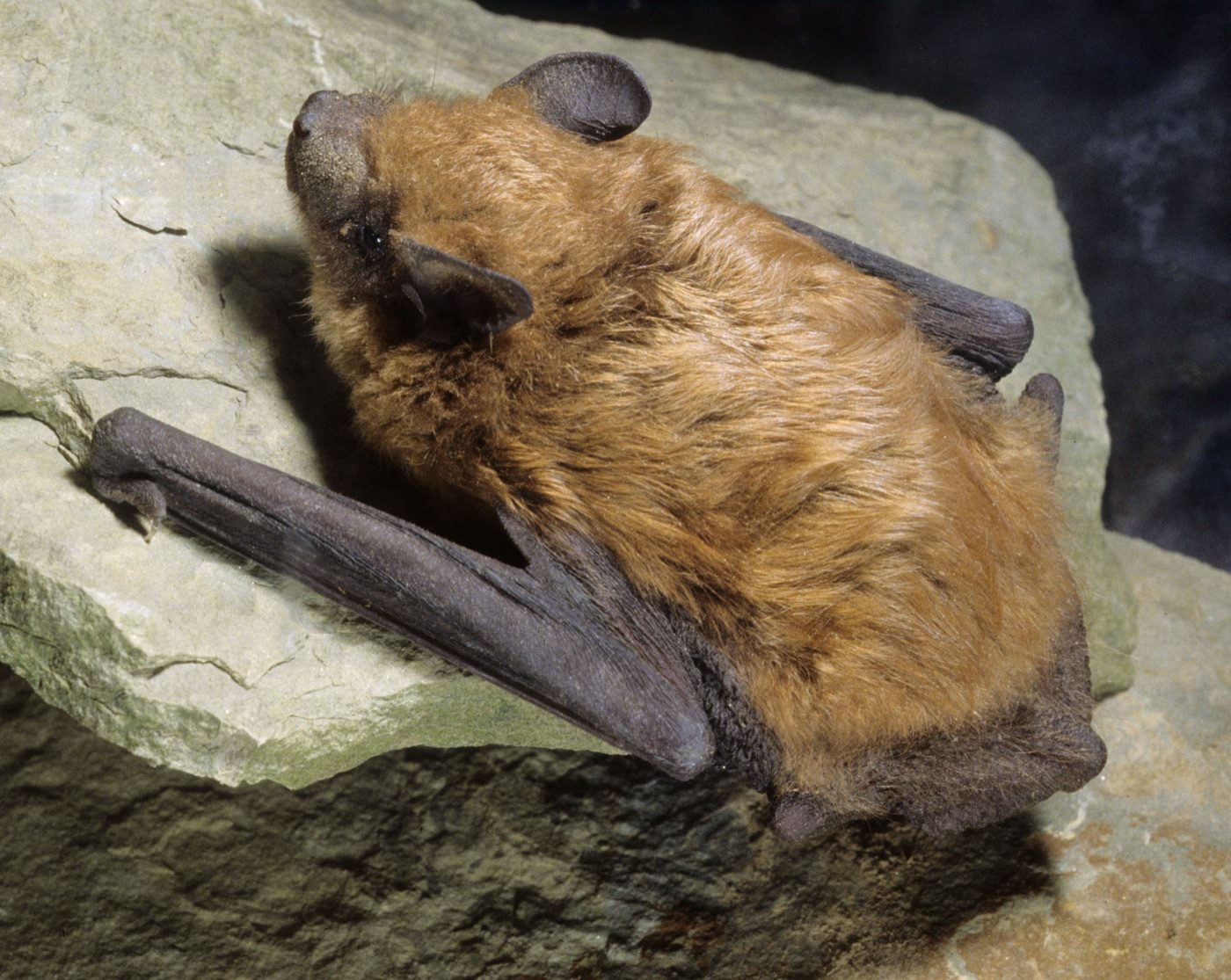
Big brown bats are the species most studied in Front Range buildings. A Colorado Bat Working Group summary of Fort Collins research found they pick human-made roosts warmer than average buildings, which helps females raise pups. The city lists foxes, raccoons, coyotes, owls and prairie dogs among its other wildlife. CPW says Colorado has roughly 20 bat species, found from the plains to downtown Denver, and it lists neighboring Douglas County among the counties where white-nose syndrome has been confirmed.
Sealing a roost without trapping bats
CDPHE's rabies FAQ warns against sealing a summer colony's outside entrance, because trapped bats are more likely to end up in the living space. Seal the cracks between the roost and the rooms first, leave the outside entrance alone, and close it after the bats have left in fall. CPW says the same from the wildlife side: avoid sealing bats out during June–August pupping season.
When bat exclusion can happen in Centennial
Colorado Parks and Wildlife asks property owners to avoid sealing bats out of buildings during pupping season, June through August. The Colorado Bat Working Group gives a slightly longer window (June to mid-August) and asks a simple question first: can the work wait until the maternity colony disperses in autumn?
In Centennial, NOAA normals for the Denver Centennial Ap station put the average low at 50°F or warmer in Jun–Aug, the stretch when insects, and therefore bats, are most active. That lines up with the state window. We use those months for inspection and night exit counts. One-way doors go up after the pups can fly, and stay up for the 5–10 nights the Working Group recommends before the last gaps are sealed.
Centennial at a glance
- Housing units: 42,799 (median year built 1984)
- Built before 1980: 41%; built 2010 or later: 9%
- Single-family detached: 74%; buildings with 10+ units: 14%
- Renter-occupied homes: 20%
- Average January low: 19°F; average July high: 87°F
- Months with an average low of 50°F or warmer: Jun–Aug
Housing figures: U.S. Census Bureau, ACS 2024 1-year estimates (tables B25024, B25034, B25035, B25003) via Census Reporter. Climate: NOAA 1991–2020 normals, Denver Centennial Ap station.
Common questions
Who handles animal control in Centennial, Colorado?
The city contracts with the Humane Society of the Pikes Peak Region for Centennial Animal Services, 303-325-8070 (after hours 303-795-4711). It handles domestic animal issues and bites. For a bat trapped indoors, call Animal Services; for possible contact, also call Arapahoe County Public Health at 303-795-4584.
Will Centennial remove a bat colony from my attic?
No. HSPPR says it is not licensed to accept wildlife, and the city refers wildlife questions to Colorado Parks and Wildlife at 303-291-7227. Removing a roosting colony is private exclusion work done under CPW timing rules.
Have rabid bats been found near Centennial?
Yes. Arapahoe County's first rabid animal in 2023 was a bat found just south of Downtown Littleton, and in 2024 and 2025 it was a bat found in Englewood. We have not found a published report of a rabid bat inside Centennial city limits.
Can I throw away a dead bat I found in my Centennial yard?
Not if anyone or any pet could have touched it, or if it was found inside. CDPHE says such a bat should not be thrown away until the health department has assessed the risk. Call Arapahoe County Public Health at 303-795-4584. The city's dead-animal pickup does not cover small animals.
When can bats be excluded from a Centennial home?
Colorado Parks and Wildlife asks owners not to seal bats out during June–August pupping season. After the young can fly, one-way devices stay up for 5–10 nights before the last openings are sealed, usually in late summer or fall.
Nearby city guides
Sources
- City of Centennial: Animal Services (HSPPR contract, contacts)
- City of Centennial: Animal Resources (agency phone list, CPW)
- City of Centennial: Request removal of a dead animal
- City of Centennial: History
- Humane Society of the Pikes Peak Region: Contact us (wildlife help, Centennial ALE)
- Arapahoe County: First 2023 case of rabies in an animal (bat south of Downtown Littleton)
- Arapahoe County: First 2024 case of rabies in Arapahoe County identified (Englewood bat near Quincy Ave. and Santa Fe Dr.)
- Arapahoe County: First 2025 Arapahoe County rabies case identified in an animal (Englewood bat near Dartmouth Ave. and Santa Fe, May 29, 2025)
- CDPHE: Colorado Rabies FAQ
- Colorado Parks and Wildlife: Living with Bats
- Colorado Parks and Wildlife: Protect your home from wildlife
- Colorado Bat Working Group (CNHP, CSU): excluding bats from buildings
- U.S. Census Bureau: City and town population estimates, Vintage 2024 (SUB-EST2024)
- Census Reporter: Centennial profile (ACS 2024 1-year)
- NOAA NCEI 1991–2020 monthly normals (Denver Centennial Ap)
Other Colorado cities we serve
We serve all of Colorado. Here are nearby service areas.
Other wildlife removal services we offer here
Centennial bat removal, done right.
Call for a phone consultation. Written warranty.