
Bat Removal Palmer Lake, CO
Palmer Lake sits at about 7,225 feet on the Palmer Divide, tucked against the foothills between Monument and Larkspur, and many of its homes are older cabins and houses set among pines and scrub oak. That mix of mature trees, water and aging wood siding is good bat habitat. Here is who to call in Palmer Lake, what El Paso County Public Health asks you to do, and when a roost can be sealed.
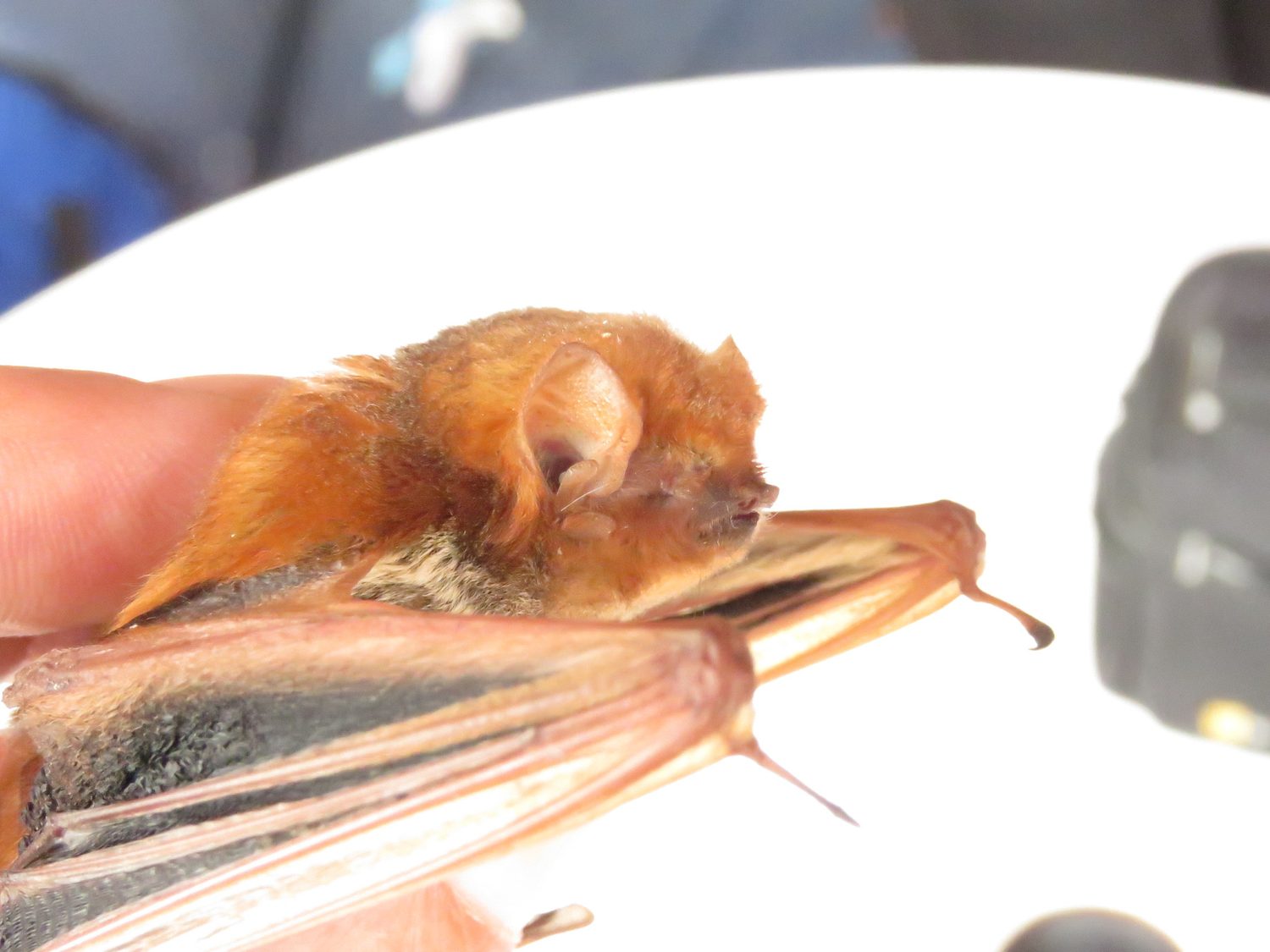
Who to call about a bat in Palmer Lake
Palmer Lake is a small statutory town with its own police department. Bat questions there split between the town police, the county health department and Colorado Parks and Wildlife, depending on whether anyone may have been exposed.
- Emergencies: 911.
- Possible contact with a bat (a bite, a scratch, a bat in a bedroom or near a child or pet): El Paso County Public Health, 719-578-3220. The county asks you to call right away and, if possible, contain the bat so it can be tested.
- Non-emergency police calls in town: the Palmer Lake Police Department asks residents to use El Paso County Dispatch, 719-390-5555. The department's office is at 54 Valley Crescent, 719-481-2934.
- Sick or injured wildlife: El Paso County Public Health directs reports to CPW's Colorado Springs office, 719-227-5200. The town also sends wildlife issues to CPW.
What El Paso County Public Health asks you to do
For a live bat in your home or garage, the county says not to touch it, to report it and its location to Public Health, and to place a box or container over it without injuring it, because it has to be intact for testing. For a dead bat on your property, wear heavy gloves such as leather work gloves, scoop it into a sealed jar or double plastic bag, keep it cold, and wait for Public Health's recommendation before throwing it out. The county notes that bat teeth are tiny and the marks can disappear quickly, so any physical encounter is worth a call. If a pet tangled with a bat, call your veterinarian as well. Our guide to finding a bat in your house has more detail.
Rabid bats in El Paso County
El Paso County Public Health publishes yearly counts of animals that tested positive for rabies. In recent years they have been almost all bats: 5 rabid bats in 2019 and again in 2020, 3 in 2021, 4 in 2022, 2 in 2023, 6 in 2024 and 5 in 2025; from 2022 through 2025 every positive animal in the county was a bat. In May 2026 the county announced its first two rabid bats of the year, one found dead beside a walking path in Fountain Creek Regional Park and one that had contact with a vaccinated house cat. The CDC says bats are now the most commonly reported rabid animal in the United States and that most people in this country who die of rabies were exposed to a bat. Most bats are not infected, but the only way to know is a lab test.
A railroad resort town on the Divide
Palmer Lake grew around a spring-fed lake that the Denver & Rio Grande Railroad used as a water stop, because steam engines climbing to the top of the Palmer Divide had to refill there. The town says it was founded in 1871 by General William Jackson Palmer and incorporated in 1889. In the 1880s Dr. William Finley Thompson platted it as a health and vacation resort, and the Rocky Mountain Chautauqua drew summer visitors from 1887 to 1910. The Census Bureau's Vintage 2024 estimate is 2,575 residents.
The housing is older and more varied than in most of the Tri-Lakes area. Of Palmer Lake's 1,138 housing units, the median was built in 1990, 32% predate 1980 and only 8% went up in 2010 or later. About 88% are single-family detached houses, 7% are mobile homes, and 10% of homes are rented (ACS 2024 5-year). On the older cabins and frame houses near the lake and along the older streets, bats use gaps behind fascia boards, cracks where log or board siding has shrunk, loose chimney flashing and attic vents with torn screens. On newer homes up the hillsides, the openings are where roof planes meet walls and at the ends of ridge vents. Many of these homes sit right against forest, so bats emerging at dusk have trees and water within a few yards.
The big brown bat is the species found most often in Colorado buildings. CPW notes that Colorado has around 20 bat species, and the Colorado Bat Working Group describes summer colonies in buildings as maternity colonies of females raising pups. Sealing a hole while bats are inside can push them into the living space, so exclusion uses one-way devices.
Summer exclusion or winter bat-proofing?
El Paso County Public Health recommends bat-proofing in winter, November through March, when bats have left to hibernate, and lists the usual entry points: roof edges, eaves, soffits and the bands around chimneys. CPW's rule is that roosts should not be sealed during pupping season, June through August. The two fit together. If bats used your house in summer, the late-summer window after pups can fly is the time to exclude them with one-way devices. If they are already gone, winter is a good time to seal. The one caution is that big brown bats sometimes stay in buildings through winter, so a house is checked before any opening is closed for the season.
When bat exclusion can happen in Palmer Lake
Colorado Parks and Wildlife asks property owners to avoid sealing bats out of buildings during pupping season, June through August. The Colorado Bat Working Group gives a slightly longer window (June to mid-August) and asks a simple question first: can the work wait until the maternity colony disperses in autumn? The Monument station, about 2 miles from Palmer Lake, averages a September low near 44°F and an October low near 33°F, so the gap between flying pups and cold nights is short at this elevation.
In Palmer Lake, NOAA normals for the Monument station put the average low at 50°F or warmer in Jul–Aug, the stretch when insects, and therefore bats, are most active. That lines up with the state window. We use those months for inspection and night exit counts. One-way doors go up after the pups can fly, and stay up for the 5–10 nights the Working Group recommends before the last gaps are sealed.
Palmer Lake at a glance
- Housing units: 1,138 (median year built 1990)
- Built before 1980: 32%; built 2010 or later: 8%
- Single-family detached: 88%; buildings with 10+ units: 0%
- Renter-occupied homes: 10%
- Average January low: 16°F; average July high: 82°F
- Months with an average low of 50°F or warmer: Jul–Aug
Housing figures: U.S. Census Bureau, ACS 2024 5-year estimates (tables B25024, B25034, B25035, B25003) via Census Reporter. Climate: NOAA 1991–2020 normals, Monument station.
Common questions
Who do I call about a bat in my Palmer Lake home?
If anyone may have touched it or slept in the room with it, call El Paso County Public Health at 719-578-3220. For non-emergency police help in town, use El Paso County Dispatch at 719-390-5555. CPW's Colorado Springs office, 719-227-5200, takes reports of sick wildlife.
I found a dead bat on my deck. What should I do?
Do not touch it with bare hands. El Paso County Public Health says to use heavy gloves or a shovel, put it in a sealed jar or double plastic bag, keep it cold, and call 719-578-3220 before throwing it away. Whether it gets tested depends on the situation.
Are rabid bats found in El Paso County?
Yes, every year. The county counted 6 rabid bats in 2024 and 5 in 2025, and from 2022 through 2025 every animal that tested positive was a bat. Its first two rabid bats of 2026 were confirmed in May.
Can I seal up my Palmer Lake house in winter?
Often, yes. El Paso County Public Health recommends bat-proofing from November through March, after bats leave to hibernate. Because big brown bats sometimes overwinter in buildings, the house should be checked first so no bats are sealed inside.
When are bats not allowed to be excluded in Palmer Lake?
Colorado Parks and Wildlife asks owners not to seal bats out during pupping season, June through August, when flightless young are in the roost. After the pups can fly, one-way devices stay up for 5 to 10 nights before the last gaps are sealed.
Nearby city guides
Sources
- Town of Palmer Lake: Police (54 Valley Crescent; 719-481-2934; non-emergency El Paso County Dispatch 719-390-5555)
- Town of Palmer Lake: Increased bear activity in town (June 25, 2026; contact CPW about wildlife issues)
- El Paso County Public Health: Rabies (bat contact 719-578-3220; bat-proofing November-March; dead bat handling)
- El Paso County Public Health: First rabid bats in El Paso County in 2026 (May 21, 2026; county totals 2019-2025; CPW 719-227-5200)
- CDC: Preventing rabies from bats (July 1, 2025)
- Colorado Parks and Wildlife: Contact us (regional and area offices)
- Town of Palmer Lake: About Palmer Lake (founded 1871, incorporated 1889)
- Town of Palmer Lake: History of Palmer Lake (D&RG water stop; Dr. William Finley Thompson platted the town; Rocky Mountain Chautauqua 1887-1910)
- Palmer Lake Historical Society: The train depots (elevation 7,225 feet; Joint Line)
- U.S. Census Bureau: City and town population estimates, Vintage 2024 (SUB-EST2024)
- Colorado Parks and Wildlife: Living with Bats
- Colorado Bat Working Group (CNHP, CSU): excluding bats from buildings
- CDPHE: Colorado Rabies FAQ
- Colorado Parks and Wildlife: Protect your home from wildlife
- Census Reporter: Palmer Lake profile (ACS 2024 5-year)
- NOAA NCEI 1991–2020 monthly normals (Monument)
Other Colorado cities we serve
We serve all of Colorado. Here are nearby service areas.
Other wildlife removal services we offer here
Palmer Lake bat removal, done right.
Call for a phone consultation. Written warranty.