
Bat Removal Highlands Ranch, CO
Highlands Ranch is a master-planned community of about 100,000 people with no city government, and nearly 5,000 of its homes back onto open space. Bats feed over those greenbelts, creeks and parks, and some end up in attics. Here is who to call in Highlands Ranch, what Douglas County Health asks you to do after a bat encounter, and how a colony is moved out of a newer suburban house.
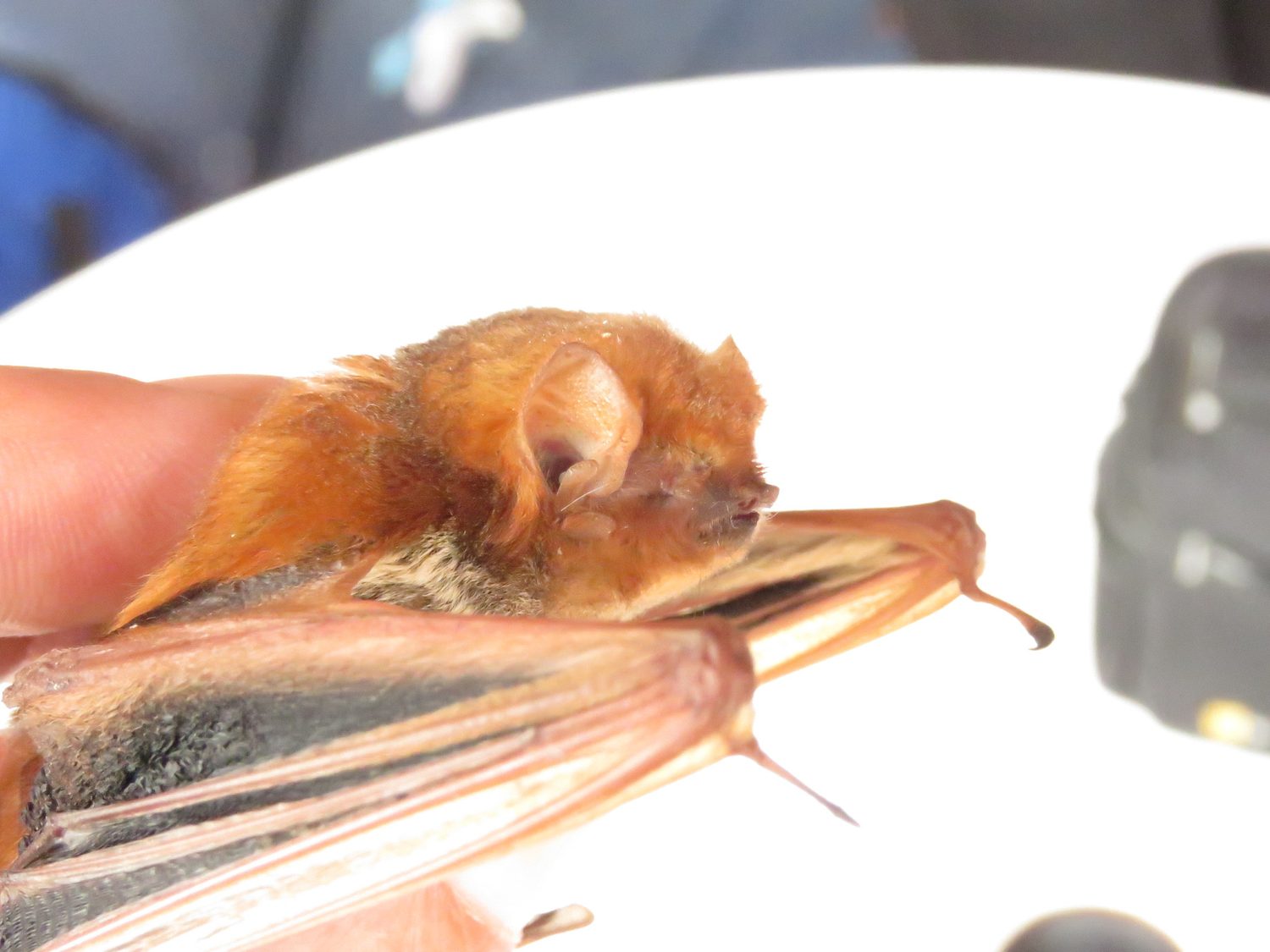
Who to call about a bat in Highlands Ranch
Highlands Ranch is an unincorporated census-designated place, so there is no city police department or city animal control. Douglas County agencies and the Highlands Ranch Metro District cover different pieces of the job.
- Emergencies: 911. Douglas County Health says a sick wild animal by itself is not an emergency.
- Possible contact with a bat (a bite or scratch, waking up with a bat in the room, or a bat in the room of an infant or small child): Douglas County Health Department, 720-643-2400. An epidemiologist assesses the risk and decides whether the bat should be tested and whether treatment is needed. Health care providers can reach one 24/7 before starting rabies shots.
- Animal control in unincorporated Douglas County: Douglas County Animal Services, 303-660-7529, for domestic animal issues. After hours, the Sheriff's Office non-emergency line is 303-660-7505.
- Wildlife questions: Colorado Parks and Wildlife, 303-291-7227. The Sheriff's Office also refers residents to the Highlands Ranch Metro District, 303-791-2710, whose park rangers handle wildlife education in the community.
Both the Health Department and the Sheriff's Office say it plainly: animal control cannot remove wild animals, and a nuisance animal on your property is a job for a private wildlife company.
What Douglas County asks you to do
Douglas County Health's advice depends on whether anyone touched the bat. If a bat gets into the house and nobody had contact, keep people and pets away, close interior doors and open an exterior door so it can leave, and don't try to catch it. If there was contact, or a bat was in a room where someone was asleep or with a baby or young child, contain it without touching it and call 720-643-2400 right away so the county can decide on testing. CDPHE adds that bat bites can be too small to notice. Our guide to finding a bat in your house covers both cases.
Rabies is present in bats all along the Front Range. Statewide, 31 of the 43 animals confirmed rabid in Colorado by late August 2026 were bats, and Colorado Parks and Wildlife says any bat you have touched without protective gloves should be reported to your county health department.
White-nose syndrome in Douglas County
Colorado Parks and Wildlife lists Douglas among the counties where white-nose syndrome has been confirmed in bats (Boulder, Douglas, El Paso, Grand, Jefferson, Larimer, Otero, Routt, Teller and Weld), and the big brown bat, the species most often found in Colorado buildings, is on its list of positive species. That is one more reason to move bats out alive with one-way devices rather than trapping them or sealing them in, and for crews to clean gear between sites.
A planned community and its houses
Highlands Ranch was the 22,000-acre Phipps ranch until Mission Viejo Company bought it in 1979. The first families moved into homes in The Grove, Bayfield and Stoney Point, near today's Northridge Recreation Center, in 1981, and the community has filled in steadily since. The Census Bureau's ACS 2020-2024 estimate is 102,257 residents.
That history shows in the housing. Of the 39,385 housing units, the median was built in 1998; only 1% predate 1980 and 16% went up in 2010 or later. About 73% are single-family detached houses, 10% are in buildings with ten or more units, and 24% of homes are rented (ACS 2024 1-year). On production homes of this age, the gaps we find most are built in, not worn in:
- the joint where the roof decking, fascia and soffit meet, especially at the corners of hip and gable roofs;
- ridge vents and gable vents without a tight screen behind them;
- chimney chases and their metal caps on homes with fireplaces;
- roof-to-wall flashing where a second story or a bump-out meets a lower roof;
- gaps around utility penetrations and behind siding or stone at the top of a wall.
The Metro District, citing CPW, tells residents to seal cracks and holes larger than a quarter inch to keep out rats, mice, bats and snakes. A big brown bat can get through a gap about the width of a thumb, so the work is about finding every one of them, not just the hole where bats were seen.
Open space and townhome HOAs
The Metro District says nearly 5,000 residential properties sit next to open space. If you live in a townhome or condo community, roofs and exterior walls are often maintained by the association, so report bats to the manager. Exclusion on attached buildings has to cover every unit sharing the roof, because bats move along the attic to the next opening.
When bat exclusion can happen in Highlands Ranch
Colorado Parks and Wildlife asks property owners to avoid sealing bats out of buildings during pupping season, June through August. The Colorado Bat Working Group gives a slightly longer window (June to mid-August) and asks a simple question first: can the work wait until the maternity colony disperses in autumn? Highlands Ranch has no NOAA normals station of its own; the Kassler station near Chatfield, about 8 miles west, averages a September low near 48°F and an October low near 36°F, so late August and September are usually the window after pups can fly.
In Highlands Ranch, NOAA normals for the Kassler station put the average low at 50°F or warmer in Jun–Aug, the stretch when insects, and therefore bats, are most active. That lines up with the state window. We use those months for inspection and night exit counts. One-way doors go up after the pups can fly, and stay up for the 5–10 nights the Working Group recommends before the last gaps are sealed.
Highlands Ranch at a glance
- Housing units: 39,385 (median year built 1998)
- Built before 1980: 1%; built 2010 or later: 16%
- Single-family detached: 73%; buildings with 10+ units: 10%
- Renter-occupied homes: 24%
- Average January low: 17°F; average July high: 87°F
- Months with an average low of 50°F or warmer: Jun–Aug
Housing figures: U.S. Census Bureau, ACS 2024 1-year estimates (tables B25024, B25034, B25035, B25003) via Census Reporter. Climate: NOAA 1991–2020 normals, Kassler station.
Common questions
Who handles animal control in Highlands Ranch?
Highlands Ranch is unincorporated, so Douglas County Animal Services (303-660-7529) handles domestic animal issues. Douglas County says animal control cannot remove wild animals; nuisance wildlife such as bats in an attic goes to a private wildlife company.
A bat was in my bedroom in Highlands Ranch. What should I do?
Don't release it or throw it away. Contain it without touching it and call the Douglas County Health Department at 720-643-2400. Waking up with a bat in the room, or finding one in a baby's or young child's room, is treated as a possible exposure because bat bites can be too small to notice.
Is white-nose syndrome in Douglas County?
Yes. Colorado Parks and Wildlife lists Douglas among the Colorado counties where white-nose syndrome has been confirmed in bats, and the big brown bat is one of the positive species. Bats should be excluded alive with one-way devices, not trapped or sealed in.
Why do newer Highlands Ranch homes get bats?
Most homes here were built in the 1980s through 2000s, and the gaps are usually built in: where fascia, soffit and roof decking meet, around ridge and gable vents, at chimney chases and along roof-to-wall flashing. A big brown bat can fit through a gap about the width of a thumb.
When can bats be excluded in Highlands Ranch?
Colorado Parks and Wildlife asks owners not to seal bats out during pupping season, June through August. After the young can fly, one-way devices stay up 5 to 10 nights before the last gaps are sealed, which usually means late August or September.
Nearby city guides
Sources
- Douglas County Health Department: Animal bites and scratches (bat in the house; animal control cannot remove wild animals; epidemiologist 720-643-2400, 24/7 for PEP decisions)
- Douglas County Sheriff's Office: Wildlife (nuisance wildlife goes to private companies; CPW 303-291-7227; Highlands Ranch Metro District 303-791-2710; non-emergency 303-660-7505)
- Highlands Ranch Metro District: Prevent conflicts with wildlife (nearly 5,000 residential properties border open space; seal holes larger than 1/4 inch to keep out bats)
- UCHealth Today: Rabies, why this deadly disease remains a threat (Sept. 4, 2026; 43 rabid animals in Colorado as of late August 2026, 31 of them bats)
- CDPHE: Colorado Rabies FAQ
- CDC: Preventing rabies from bats
- Colorado Parks and Wildlife: Living with Bats (white-nose syndrome positive counties and species)
- Colorado Parks and Wildlife: Contact us (Northeast Region, Denver office 303-291-7227)
- Highlands Ranch Historical Society: History (22,000-acre master-planned community; Mission Viejo Company; first homes 1981)
- Highlands Ranch Historical Society: The first homes and subdivisions (The Grove, Bayfield, Stoney Point, 1981)
- Census Reporter: Highlands Ranch CDP, Colorado (ACS 2024 5-year population 102,257)
- Colorado Parks and Wildlife: Living with Bats
- Colorado Bat Working Group (CNHP, CSU): excluding bats from buildings
- Colorado Parks and Wildlife: Protect your home from wildlife
- Census Reporter: Highlands Ranch profile (ACS 2024 1-year)
- NOAA NCEI 1991–2020 monthly normals (Kassler)
Other Colorado cities we serve
We serve all of Colorado. Here are nearby service areas.
Other wildlife removal services we offer here
Highlands Ranch bat removal, done right.
Call for a phone consultation. Written warranty.