
Bat Removal Firestone, CO
Firestone grew from about 1,900 people in 2000 to more than 19,000, and most of its houses are less than 25 years old. New homes still get bats. Firestone's own animal control does not handle wildlife, so it helps to know ahead of time who tests a bat, what Weld County's rabies records show, and when a roost can legally be sealed.
Who to call about a bat in Firestone
The Firestone Police Department has two community service officers who cover animal control along with code enforcement. The town says its animal control picks up dogs at large and does not handle felines or wildlife. A bat question therefore goes to Weld County's health department, not to the town.
- Emergencies: 911.
- Possible contact with a bat (a bite, a scratch, a bat in a bedroom or near a child or pet): Weld County Department of Public Health and Environment (WCDPHE), 970-400-2290, weekdays 8 a.m. to 5 p.m. After hours, Weld County dispatch at 970-350-9600, option 1.
- Animal bites: Colorado law requires bites that break the skin to be reported to local police; in town that is Firestone Police, 303-833-0811. The town says a report is also filed with the Weld County health department.
- A sick or grounded bat with no human or pet contact: Weld County says to report sick wild animals to Colorado Parks and Wildlife. CPW's Denver office, which covers this part of the Front Range, is 303-291-7227.
Weld County's instructions for a bat with possible contact: keep it in one room, and if it is safe, put on leather gloves and trap it in a container with a tight lid, poking small air holes if it is alive. Do not throw it away; call WCDPHE first so it can be tested at the state lab. A negative test usually means no rabies shots. If there was no contact at all, the bat can be let out. Our guide to finding a bat in your house walks through both cases.
What Weld County's rabies records show
WCDPHE publishes a count of rabid animals by year. Bats lead almost every year: 5 rabid bats in 2025, 6 in 2024, 2 in 2023, 1 in 2022, 2 in 2021, 6 in 2020 and 8 in both 2019 and 2018. Skunks are the other regular carrier. The closest recent case to Firestone came on May 5, 2025, when a bat was found acting oddly on the ground just east of Highland Lake in Mead, a few miles north of Firestone. It tested positive the next day, and the county said it was the first animal to test positive for rabies anywhere in Colorado that year. The county also says several dozen Weld residents have needed rabies post-exposure treatment over the past several years after contact with animals, and that no one in Weld County has died of rabies.
Those counts include only bats that were tested, mostly because someone had contact with them. Most bats are not rabid. The point is that you cannot tell by looking, which is why a bat found in a bedroom is kept for testing.
A coal town that turned into a commuter town
Firestone was established in 1908 to house coal miners and was named for Ohio investor Jacob H. Firestone. Five mines operated there until 1947, and the rail bed that hauled the coal is now the 12-mile Firestone Trail. With Frederick and Dacono it is one of the Tri-Towns, or Carbon Valley. According to the town, its population went from 1,908 in 2000 to 10,147 in 2010, a 431 percent increase that made it the fastest-growing community in Colorado that decade. The Census Bureau's Vintage 2024 estimate is 19,396.
That growth shows in the housing. Of Firestone's 6,520 housing units, the median was built in 2009, 44% went up in 2010 or later and only 5% predate 1980. About 76% are single-family detached houses, 9% are mobile homes, and 19% of homes are rented (ACS 2024 5-year). On houses this new, bats rarely get in through rotted wood. The openings we find are construction gaps: where a garage roof meets the wall of a two-story house, at the ends of ridge vents, behind loose J-channel and trim on vinyl siding, at gable vents whose screens were never installed or have pulled loose, and where the soffit returns at a roof-line bump-out. A gap about the width of a thumb is enough for a big brown bat.
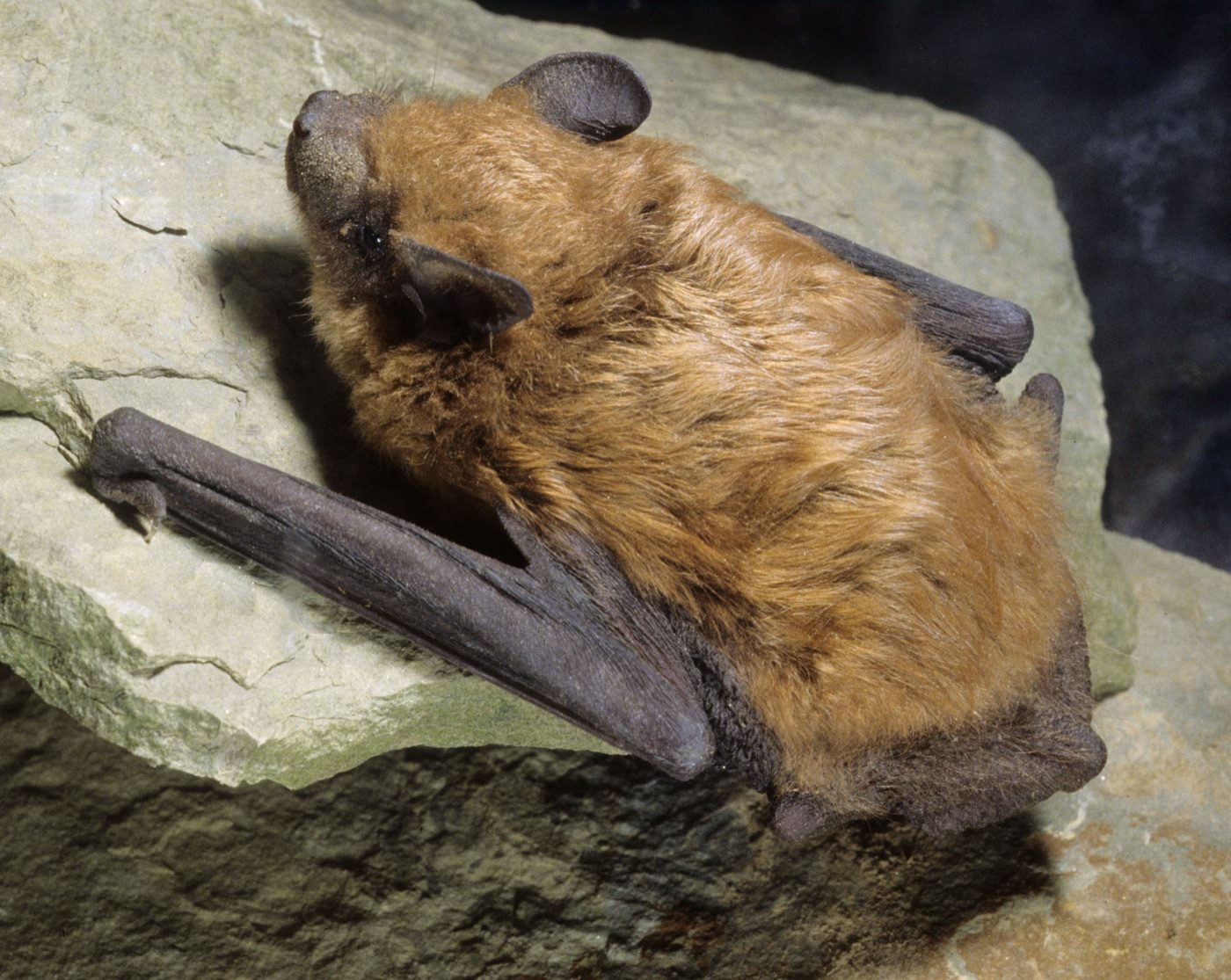
The St. Vrain Creek corridor, Firestone's ponds and parks along the trail, and the irrigated farmland that still surrounds town produce the night-flying insects bats eat. The big brown bat is the species found most often in Colorado buildings. The Colorado Bat Working Group describes summer colonies in buildings as maternity colonies of females raising pups, and warns that sealing a hole while bats are inside can drive them into the living space. That is why exclusion uses one-way devices rather than caulk alone.
When bat exclusion can happen in Firestone
Colorado Parks and Wildlife asks property owners to avoid sealing bats out of buildings during pupping season, June through August. The Colorado Bat Working Group gives a slightly longer window (June to mid-August) and asks a simple question first: can the work wait until the maternity colony disperses in autumn? Firestone has no NOAA normals station of its own; the Longmont 2 ESE station, about 7 miles west, averages a September low near 46°F, so the weeks right after pups can fly are the practical window.
In Firestone, NOAA normals for the Longmont 2 Ese station put the average low at 50°F or warmer in Jun–Aug, the stretch when insects, and therefore bats, are most active. That lines up with the state window. We use those months for inspection and night exit counts. One-way doors go up after the pups can fly, and stay up for the 5–10 nights the Working Group recommends before the last gaps are sealed.
Rentals and HOAs
About one in five Firestone homes is rented. In a rental, sealing the exterior is the owner's responsibility, so a tenant who hears scratching in a wall or sees bats leaving the roof at dusk should tell the landlord or property manager early, before pups are born in June. Many Firestone neighborhoods have HOAs; exclusion devices are temporary, and permanent sealing uses materials matched to the existing trim, which usually avoids covenant problems.
Firestone at a glance
- Housing units: 6,520 (median year built 2009)
- Built before 1980: 5%; built 2010 or later: 44%
- Single-family detached: 76%; buildings with 10+ units: 10%
- Renter-occupied homes: 19%
- Average January low: 14°F; average July high: 91°F
- Months with an average low of 50°F or warmer: Jun–Aug
Housing figures: U.S. Census Bureau, ACS 2024 5-year estimates (tables B25024, B25034, B25035, B25003) via Census Reporter. Climate: NOAA 1991–2020 normals, Longmont 2 Ese station.
Common questions
Will Firestone animal control remove a bat from my house?
No. The Town of Firestone says its animal control, run by two police community service officers, picks up dogs at large and does not handle felines or wildlife. If anyone may have had contact with the bat, call Weld County public health at 970-400-2290 (after hours, 970-350-9600, option 1).
A bat was in my child's bedroom in Firestone. What should I do?
Do not let it go. Weld County says a bat found where a person was asleep or a child was unsupervised counts as possible contact. Close the room, trap the bat in a lidded container with leather gloves if it is safe, and call WCDPHE at 970-400-2290 so it can be tested.
Have rabid bats been found near Firestone?
Yes. Weld County recorded 5 rabid bats in 2025 and 6 in 2024. On May 5, 2025, a rabid bat was found near Highland Lake in Mead, a few miles north, and it was the first animal to test positive in Colorado that year.
My Firestone house was built after 2010. How are bats getting in?
Through construction gaps rather than rot: where a garage roof meets a second-story wall, at ridge-vent ends, behind loose siding trim, at unscreened gable vents and at soffit returns. Bats need only a gap about the width of a thumb.
When can bats be sealed out of a Firestone home?
Not during pupping season, June through August, according to Colorado Parks and Wildlife. Once the young can fly, one-way devices stay up for 5 to 10 nights before the last openings are sealed. Late August and September is the usual window here.
Nearby city guides
Sources
- Town of Firestone: Animal Control (two community service officers; does not handle felines or wildlife; bites reported to police and Weld County Health)
- Town of Firestone: History of Firestone (1908 coal town; 1,908 residents in 2000 to 10,147 in 2010)
- Weld County Department of Public Health and Environment: Rabies (bat exposure guidance; historical rabies cases by year)
- Weld County: Bat tests positive for rabies in Weld County (May 7, 2025; Highland Lake, Mead; WCDPHE 970-400-2290)
- Colorado Parks and Wildlife: Contact us (regional and area offices)
- U.S. Census Bureau: City and town population estimates, Vintage 2024 (SUB-EST2024)
- Colorado Parks and Wildlife: Living with Bats
- Colorado Bat Working Group (CNHP, CSU): excluding bats from buildings
- CDPHE: Colorado Rabies FAQ
- Colorado Parks and Wildlife: Protect your home from wildlife
- Census Reporter: Firestone profile (ACS 2024 5-year)
- NOAA NCEI 1991–2020 monthly normals (Longmont 2 Ese)
Other Colorado cities we serve
We serve all of Colorado. Here are nearby service areas.
Other wildlife removal services we offer here
Firestone bat removal, done right.
Call for a phone consultation. Written warranty.